
TL;DR
Bali's property market has long attracted foreign capital on the promise of high rental yields, but most investors end up with returns in the 6–10% ra
The Facts
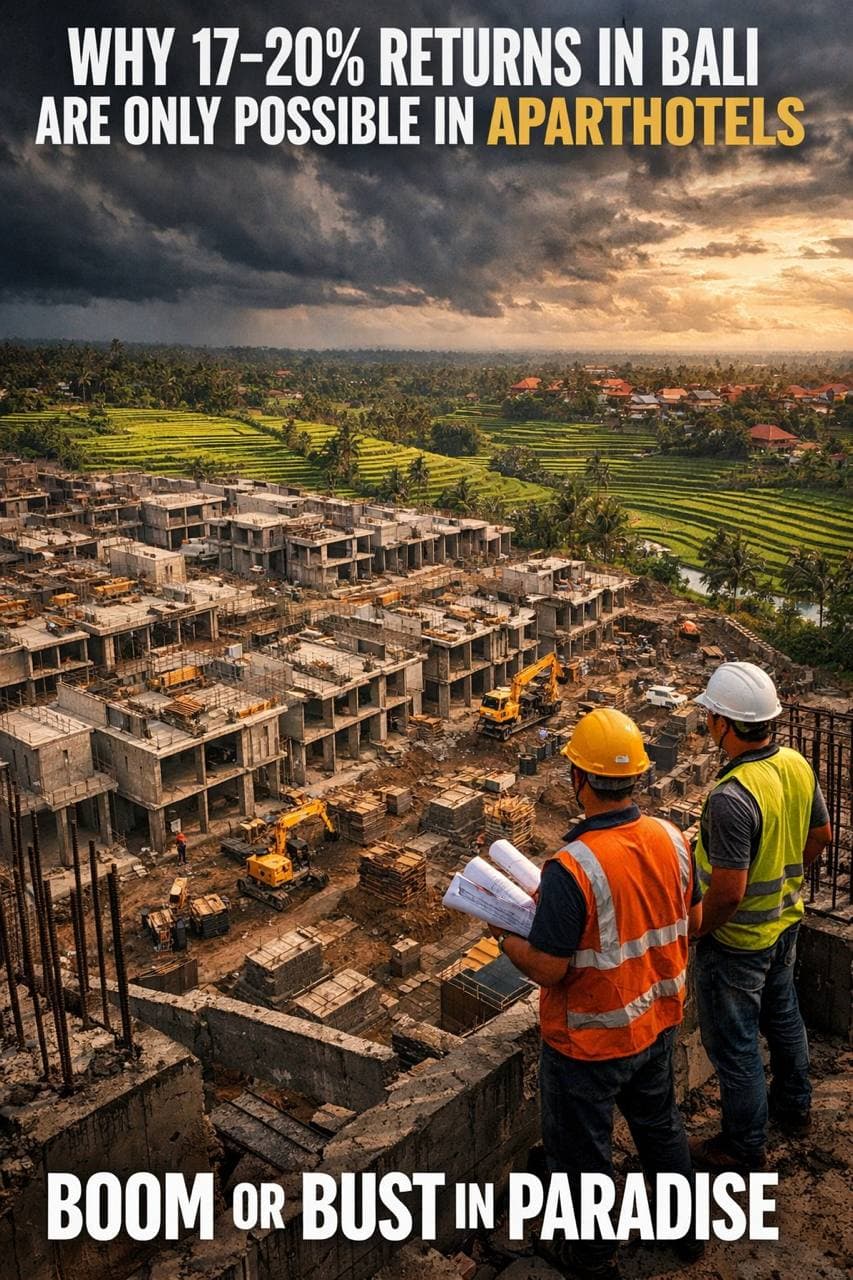
Bali's property market has long attracted foreign capital on the promise of high rental yields, but most investors end up with returns in the 6–10% range — respectable by global standards, yet well short of the figures circulated in developer brochures. For a broader look at what Bali's 2026 property investment numbers actually tell you, including villa price benchmarks and leasehold land rates across key corridors, the picture is more nuanced than most developer pitches suggest. The aparthotel category is the exception. Units within professionally managed aparthotel complexes are consistently producing net returns of 17–20% per annum, according to data from operators and independent analysts tracking the Seminyak, Canggu, and Ubud corridors.
The structural reason is straightforward: aparthotels operate under a dual-revenue model. Units are rented on short-stay platforms — Airbnb, Booking.com, and direct hotel channels — during peak tourist periods, then converted to medium and long-term leases during shoulder seasons. This flexibility prevents the revenue gaps that plague single-strategy assets. A standard villa locked into annual leases leaves money on the table during high season; a standalone guesthouse loses occupancy when the tourist calendar dips.
Professional management is the second lever. Aparthotel operators centralise front desk, housekeeping, maintenance, and channel management across all units in a building. This shared cost structure compresses operating expenses significantly compared with an investor running a single villa independently. Revenue is pooled and distributed to unit holders on a pro-rata or revenue-share basis, removing the operational burden from the individual investor.
Bali's tourism recovery post-pandemic has also created a supply-demand imbalance in the aparthotel segment specifically. Visitor numbers to Bali exceeded 5.2 million international arrivals in 2024 and are tracking higher in 2025, yet quality-managed short-stay inventory in the mid-range bracket — the sweet spot for aparthotels — has not kept pace. This undersupply directly inflates occupancy rates and average daily rates for existing operators.
Land acquisition constraints add a moat. Building a new aparthotel in Bali requires navigating zoning classifications, Hak Pakai or nominee structures for foreign buyers, and building permits that can take 18–24 months. New supply is therefore slow to materialise, extending the window of outperformance for assets already in operation. Investors entering the market now via an established aparthotel complex are buying into a supply-constrained environment that is unlikely to normalise before 2027 at the earliest.
Bali Zero Take
The Hidden Insight
At Bali Zero, we have been guiding clients through Bali property structures for years, and the aparthotel category has moved from a niche conversation to one of our most frequent advisory topics. The
Our Analysis
17–20% headline figure is real — we have reviewed the accounts of operating assets in Canggu and Seminyak that substantiate those numbers — but the range of outcomes is wide. The difference between an
Our Advice
asset delivering 20% and one delivering 9% almost always comes down to operator quality and the legal structure underpinning ownership.
Foreign nationals cannot hold freehold (Hak Milik) in Indonesia. Aparthotel units are typically sold under long-term leasehold or through a PT PMA structure that holds Hak Guna Bangunan title. Each structure has materially different tax, succession, and exit implications. Clients who enter without proper due diligence on the title chain have found themselves with legally ambiguous assets that are impossible to resell to a subsequent foreign buyer.
Our recommendation is always to treat the projected return as a starting point for stress-testing, not as a sales promise. Model the yield at 60% occupancy, not 85%. Verify that the management company has a track record of at least three years of audited distributions. And ensure the PT PMA or leasehold deed is reviewed by an Indonesian notary independent of the developer.
Next Steps
Action Items
Ask Zantara
AI-powered answers from our knowledge base

Exa: hasporealty.com
Questions about how this applies to your case?
Bali Zero handles visas, company setup, tax and property compliance in Indonesia. Ask us directly on WhatsApp.
Chat with Bali Zero on WhatsApp