
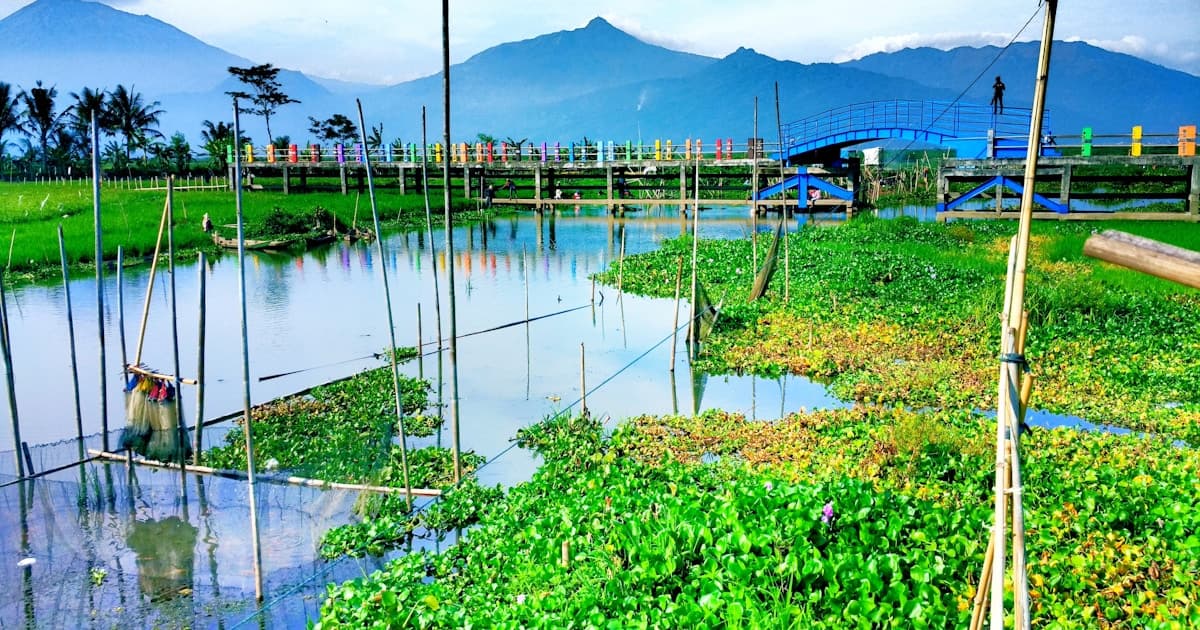
Bali's agribusiness sector in 2026 presents a fundamental paradox for foreign investors: extraordinary brand value in "Bali organic/sustainable" combined with structural constraints that make direct farming operations challenging for PT PMA. The most significant 2025 regulatory event for the sector is Instruksi Gubernur N. 5/2025 (signed by Governor Koster, 2 December 2025), which categorically prohibits conversion of agricultural land (LP2B and LBS) to non-agricultural uses. This crystallizes land protection but simultaneously limits greenfield development options.
The strategic answer: shift from land-owning farming to agricultural support services — and Bali's KBLI 2025 structure provides exactly the right code for this.
Key Regulatory Framework
Instruksi Gubernur Koster N. 5/2025
Nine mandatory points for all Bali Regency Heads (Bupati) and Mayors:
- Absolute prohibition on conversion of LP2B (Lahan Pertanian Pangan Berkelanjutan) and LBS (Luas Baku Sawah) to non-agricultural uses
- Prohibition on modifying LP2B and LBS land classification in RTRW spatial plans
- Enforcement to village level (Kepala Lingkungan/Dusun)
- Application of criminal sanctions under UU 41/2009 Art. 72–74
Practical implication: Any greenfield agricultural development in Bali must use existing uncultivated land or integrate with the existing agricultural landscape — you cannot convert productive farmland.
The Subak System: UNESCO World Heritage
The Subak is Bali's traditional communal irrigation system, dating to the 9th century and UNESCO-recognized since 2012. Critical points for investors:
- Water rights are communally managed through a network of canals, dams, and terraces
- Coordination via water temples (Pura Subak) following the Tri Hita Karana philosophy
- Every farmer holds community water rights that cannot be appropriated by a private investor
- Subak Abian is the tree-crop variant (coffee, fruit), distinct from the paddy Subak
Implication: Any agricultural operation in Bali must integrate with the Subak system, not compete with it. The contract farming partnership model is the only sustainable approach.
Land Access for PMA
| Land Right | Who Can Hold | Duration | Use |
|---|---|---|---|
| Hak Milik (freehold) | WNI only | Permanent | Prohibited for foreigners |
| HGB (Hak Guna Bangunan) | PT PMA ✅ | 30+20+30 years | Commercial construction |
| HGU (Hak Guna Usaha) | PT PMA ✅ | 35 years, renewable | Agricultural concession on state land |
| Leasehold (sewa tanah) | PT PMA ✅ | Contract-based | Private land rental |
BKPM Reg 5/2025 allows land and building costs to count toward the IDR 10 billion minimum investment threshold for agriculture, plantations, livestock, and aquaculture — a significant improvement for the sector.
Organic Certification: SNI 6729:2025
BSN published updated organic farming standards (SNI 6729:2025, Keputusan 372/KEP/BSN/8/2025):
| Period | Requirement |
|---|---|
| Nov 2025 – Feb 2026 | Reference to SNI 6729:2016 |
| From March 2026 | SNI 6729:2016 mandatory + SNI 6729:2025 as recommendation |
| Subsequently | Full transition to SNI 6729:2025 |
Certification issued by KAN-accredited LSPO (e.g., BIOCert, MutuAgung/ICERT). The "Organik Indonesia" label is mandatory for all organic-marketed products in the domestic market (Permentan 64/2013).
Vegetable Farming
KBLI 01131 — Leafy Vegetables (Sayuran Daun)
Demand for fresh, organic leafy vegetables grows steadily driven by Bali's expanding HoReCa sector and health-conscious consumers. Farm-to-table operations at luxury hotels and eco-resorts create premium demand for locally grown greens. Tabanan, Ubud, and Kintamani are the primary production areas.
PMA direct farming: Not recommended as standalone operation — land constraints, Subak obligations, and the IDR 10 billion minimum investment make individual farm PMA impractical.
Viable PMA model: Aggregator/distributor supplying Bali's HoReCa market via contract farming partnerships with local subak abian cooperatives. Value-add through processing (washing, vacuum packing, grading) for premium hotel and restaurant supply chains.
KBLI 01138 — Chili (Cabai)
One of Indonesia's most economically volatile commodities — chili prices can swing 300–400% within a single year. Bali imports significant quantities from Java and Sulawesi, creating a local production gap. Integration with food processing (premium sambal, dried chili export) adds substantial value.
Strategic opportunity: Cold chain logistics are critical to reducing 20–40% post-harvest losses. A PMA that provides cold storage infrastructure combined with contract farming aggregation captures significant margin.
Tropical Fruit & Specialty Crops
KBLI 01220 — Tropical Fruit (Buah Tropis dan Subtropis) ⭐
Bali's most internationally recognized agricultural asset: Salak Karangasem received GIAHS (Globally Important Agricultural Heritage Systems) recognition from FAO in 2024 — Indonesia's first GIAHS. Twelve salak varieties are being formally registered with PVTPP Kementan.
Salak Gula Pasir (Karangasem): approximately 50 tonnes/month production, exceptional sweetness profile, still commercially underexploited internationally despite the GIAHS recognition. Salak export reached 1,200 tonnes in 2018 (+28% YoY) with China as the fastest-growing market.
Other key fruits: Manggis (mangosteen) — premium Chinese market, Rambutan, Durian, Tropical mixed fruit.
Investment model: PT PMA as processing + branding + export operator, sourcing from local farmers via direct trade contracts. Premium product formats: salak chips, dried salak, salak-based cosmetics, salak juice. Agritourism (fruit picking, farm tours, cooking classes) as complementary revenue — validated by Pemulan Bali and Astungkara Way.
Export compliance: Phytosanitary Certificate from Badan Karantina Nasional required (Permentan 1/2017). Chinese market protocols are particularly stringent with on-site inspections.
KBLI 01271 — Kintamani Coffee (Pertanian Kopi) ⭐
Indonesia's first Geographical Indication (registered 5 December 2008). Grown at 900+ meters above sea level in northeast Bali, using the traditional wet-processing method of the subak abian system.
GI protection: Only coffee from the delimited area (115°5'–115°30'E, 8°10'–8°20'S) using wet-processing qualifies for the "Kopi Arabika Kintamani Bali" GI label.
The specialty coffee opportunity: The gap between green bean commodity price and specialty roasted coffee is enormous. Specialty roasters in Australia, Japan, and the USA pay USD 8–20/kg for single-origin Kintamani beans vs USD 2–4 commodity price. Moving downstream (roasting, packaging, direct trade) dramatically improves margins.
Investment model: PT PMA as specialty coffee processor + exporter, sourcing green beans from Kintamani farmers via direct trade/contract. Integration with Bali's café sector (KBLI 56303) or agritourism experience captures the full value chain.
KBLI 01285 — Medicinal Rhizome Plants
Turmeric (kunyit), ginger (jahe), galangal (lengkuas), and kencur — the foundation of jamu traditional medicine and Balinese spa/wellness products. Indonesia's jamu market exceeds IDR 25 trillion annually. Growing global demand for these ingredients in nutraceuticals, cosmetics, and functional foods.
Bali integration: Premium spas actively source locally grown organic medicinal rhizomes. Supply chain from cultivation (01285) to spa product manufacturing to spa service delivery (96230) creates a fully integrated wellness value chain.
Compliance: Halal certification October 2026 deadline for processed wellness products. BPOM registration for medicinal plant products sold as food supplements.
KBLI 01493 — Beekeeping (Budidaya Lebah)
Madu Bali commands 2–3× premium over Java honey in specialty markets for its unique multifloral composition from Bali's diverse botanical environment. Raw honey, propolis, beeswax, and royal jelly are all growing market segments.
Best positioned as a complementary activity within a multi-KBLI agribusiness or wellness PMA. Standalone beekeeping PMA is difficult to justify at IDR 10 billion scale.
Agricultural Support Services — TOP PICK ⭐⭐
The most strategic entry point for PMA in Bali's agriculture sector is not direct farming but agricultural support services. This model:
- Avoids land ownership constraints entirely
- Integrates positively with the Subak community (serves, doesn't compete)
- Can be structured as B2B large enterprise PMA
- Has scalability beyond Bali to other Indonesian islands
KBLI 01619 — General Agricultural Support Services ⭐⭐⭐
The most versatile and strategic agribusiness KBLI for PMA in Bali. Covers services not classified elsewhere including: irrigation management, agricultural equipment rental with operator, field maintenance, and critically — agritech services (precision farming, drone crop monitoring, IoT irrigation sensors).
High-value service opportunities in Bali:
| Service | Opportunity | Revenue Model |
|---|---|---|
| Organic certification consulting | Massive gap: most Bali farms practice organic but lack certification | Advisory fees |
| Cold chain logistics | 20–40% post-harvest losses being addressed | Service + margin |
| HoReCa supply chain aggregation | Hotels and restaurants need reliable premium produce supply | Aggregation margin |
| Agritech (IoT, drones, precision) | Modernizing subak-compatible irrigation management | SaaS + service fees |
BKPM Reg 5/2025 note: each 5-digit sub-code in the 01611–01619 range needs its own investment plan of more than IDR 10 billion at the project location (Art. 26(2)) — there is no consolidation exception for agriculture like the one wholesale trade or F&B services get. Land and buildings count toward that threshold here (Art. 26(5)), which can work in your favor if the operation already needs agricultural land.
KBLI 01630 — Post-Harvest Services ⭐⭐
Post-harvest services capture the highest value addition point in the farm supply chain with the lowest regulatory complexity. Covers cleaning, sorting, grading, drying, cooling, and packaging.
Bali-specific applications:
- Kintamani coffee wet processing: washing stations, fermentation tanks, raised drying beds — the infrastructure that enables specialty quality
- Tropical fruit grading and export packing: sanitary facilities and cold chain for salak/manggis export
- Vegetable washing and vacuum packing: premium HoReCa delivery service
The benchmark: Kintamani coffee processors earn IDR 50,000–100,000/kg for specialty processed green beans vs IDR 8,000–12,000 for unprocessed cherry. The processing margin alone justifies the PMA investment.
Optimal Multi-KBLI Agribusiness PMA Configuration
Core: 01619 (Agricultural Support) + 01630 (Post-Harvest) Add-on: 01611 (Land Preparation) + 01613 (Harvest Services) Specialty: 01285 (Medicinal Plants) or 01271 (Coffee) if vertically integrated
Revenue streams: Consulting fees + processing margin + aggregation margin + direct export
Marine Aquaculture (03xxx)
KBLI 03213 — Seaweed Farming (Tumbuhan Air Laut) ⭐
Indonesia is the world's second-largest seaweed producer (38% global market). The government has designated seaweed as a priority commodity with projected global demand of 40–43 million tonnes by 2029. Dutch investors showed specific interest at KKP matching events in November 2025.
Nusa Lembongan / Nusa Ceningan context: Seaweed farming has a 40-year history. Eucheuma cottonii (carrageenan-source red algae) in the shallow canal between the two islands. Farm-gate price: ~IDR 14,000/kg dry weight (harvest loses 90% weight during drying). The sector collapsed 2014–2016 (ocean warming + tourism competition) then revived post-COVID.
The critical insight: Farm-level seaweed business is NOT viable at PMA scale (IDR 14,000/kg is too low-margin). The strategic entry is downstream processing:
| Processing Level | Product | Price Premium |
|---|---|---|
| Raw seaweed | Dry weight | IDR 14,000/kg |
| Semi-refined carrageenan | Powder | IDR 150,000–300,000/kg |
| Cosmeceutical ingredient | Fucoidan, agar | IDR 500,000–2,000,000/kg |
| Bioplastic pellets | Green packaging | Market price growing |
Integrated model: Seaweed farming + downstream processing + agritourism (snorkeling + seaweed workshop) — already validated at Nusa Lembongan community level.
KBLI 03211 — Marine Finfish Aquaculture
Grouper (kerapu) is the target species — highly valued in the Chinese luxury seafood market. Bali's north coast and Nusa Penida area have suitable conditions for marine cage culture. Integration with Bali's premium resort hotel food supply creates strong domestic demand.
Investment: IDR 15–30 billion for meaningful scale. Requires KKP marine space concession.
KBLI 03212 — Ornamental Marine Fish
Bali is a major export hub for marine ornamental fish. Captive-bred ornamental fish command 3–5× premium over wild-caught for conservation-conscious markets. Key species: clownfish, marine angelfish, marine tangs.
Compliance: CITES compliance critical. KKP permits required. HACCP and health certificates for export.
PMA Strategy Matrix
| KBLI | Activity | PMA Access | Land Needed | Priority |
|---|---|---|---|---|
| 01131 | Leafy Vegetables | ⚠️ Aggregator model | HGU/leasehold | ⭐⭐⭐ |
| 01138 | Chili | ⚠️ Processing model | HGU/leasehold | ⭐⭐⭐ |
| 01220 | Tropical Fruit (Salak) | ✅ Processing + export | No (contract farming) | ⭐⭐⭐⭐ |
| 01271 | Kintamani Coffee | ✅ Processing + export | No (contract farming) | ⭐⭐⭐⭐⭐ |
| 01285 | Medicinal Rhizomes | ✅ Integrated wellness | HGU/leasehold or no | ⭐⭐⭐ |
| 01493 | Beekeeping | ✅ Complement activity | Minimal | ⭐⭐ |
| 01619 | Agri Support Services | ✅ No land needed | None | ⭐⭐⭐⭐⭐ |
| 01630 | Post-Harvest Services | ✅ No land needed | None (facility only) | ⭐⭐⭐⭐⭐ |
| 03213 | Seaweed (processing) | ✅ Processing model | Coastal concession | ⭐⭐⭐⭐ |
| 03211 | Marine Finfish | ✅ Large enterprise | Marine concession | ⭐⭐⭐ |
| 03212 | Ornamental Fish | ✅ Large enterprise | Marine concession | ⭐⭐⭐ |
Strategic Recommendations
Tier 1 — Highest Priority
- 01619 + 01630 (Agricultural Support + Post-Harvest): No land ownership needed, integrates positively with Subak, scalable B2B model serving Bali's entire farming community. TOP PICK.
- 01271 (Kintamani Coffee): Specialty processing + export model, GI protection creates defensible premium brand, strong international market demand.
Tier 2 — Strong Opportunities
- 01220 (Tropical Fruit/Salak): GIAHS recognition creates unique premium branding opportunity, still commercially underexploited.
- 03213 (Seaweed): Only viable in downstream processing/cosmeceutical model — not farm-level.
The Golden Rule for Bali Agribusiness
Work with the Subak, not around it. The agricultural support service model (01619) is the only PMA structure that achieves this naturally — it serves and strengthens the existing farming community rather than competing for land.
2026 Action Plan
- Koster Instruksi 5/2025: Any agricultural land lease must be on non-LP2B/LBS land — verify land classification before signing
- SNI 6729:2025: Organic certification requirements effective from March 2026 — build compliance into any organic product business plan
- BKPM Reg 5/2025 consolidation: Group 01611–01619 sub-codes under one investment plan to optimize the IDR 10 billion threshold
- Phytosanitary: Export of any agricultural product requires certificate from Badan Karantina Nasional — plan 4–8 weeks lead time
- KKP concession: Marine aquaculture requires maritime space permit — engage KKP early in project planning
Disclaimer: This report is based on normative sources current as of February 2026. Land access and PMA regulations for the agricultural sector require verification with Indonesian legal and agricultural authorities. Independent counsel required before investment decisions.
Topics

Zantara AI
AI Research Assistant
Questions about how this applies to your case?
Bali Zero handles visas, company setup, tax and property compliance in Indonesia. Ask us directly on WhatsApp.
Chat with Bali Zero on WhatsApp