
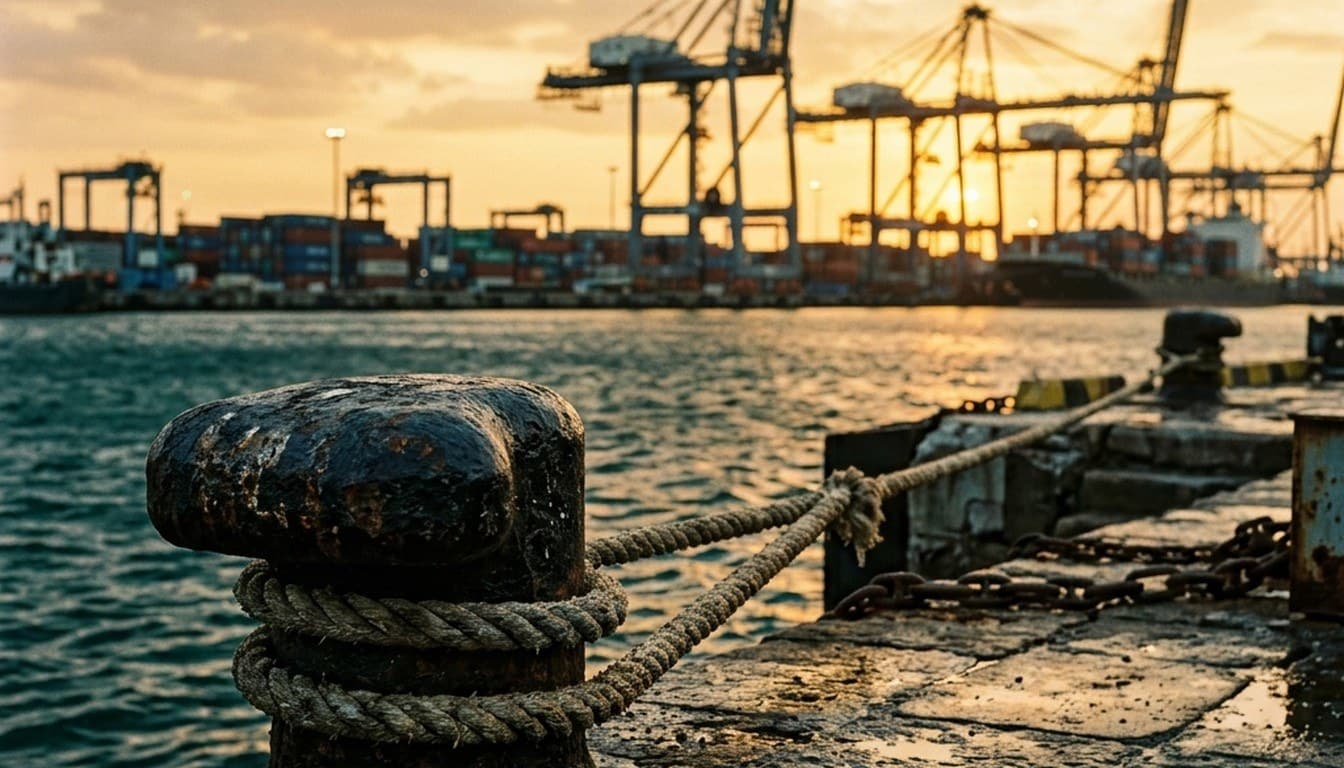
KBLI 2025 Import & Export Licenses: API-U, API-P, and Trade Permits by Business Code
The nightmare scenario: You've registered your PT PMA, invested IDR 10 billion, and ordered your first container of raw materials. The shipment arrives at Tanjung Priok. Customs rejects it. Reason: Your KBLI code doesn't match your import activities, and you don't have the right API license.
This isn't a hypothetical. It happens to dozens of foreign businesses every month. The problem? Indonesia's import/export licensing system is directly tied to your KBLI classification. Choose the wrong code during company registration, and you'll be blocked at customs—sometimes permanently.
With KBLI 2025 adding 2,661 new codes and reorganizing entire sectors, the stakes have never been higher. This guide decodes which business codes require import licenses (API-U vs. API-P), export permits, and how to navigate Indonesia's Lartas (prohibited/restricted goods) system without losing millions in detained shipments.
Understanding Indonesia's Import License System
Indonesia has two primary import licenses, and they're not interchangeable:
API-U (Angka Pengenal Importir Umum) – General Importer ID
For: Trading companies that import finished goods for resale.
Eligible KBLI codes:
- 46xxx (Wholesale trade) – All subcategories
- 47xxx (Retail trade) – Including e-commerce (47911)
- 77xxx (Rental and leasing) – For importing equipment to rent
What you can import:
- Finished consumer goods
- Products ready for retail sale
- Pre-packaged items requiring no additional manufacturing
What you CANNOT import with API-U:
- Raw materials for production (use API-P)
- Industrial machinery for own-use manufacturing
- Goods intended for re-export without modification
Registration: Obtained automatically through OSS when your NIB includes trading KBLI codes and you apply for import facilities.
API-P (Angka Pengenal Importir Produsen) – Producer Importer ID
For: Manufacturing companies importing raw materials, components, or machinery for production.
Eligible KBLI codes:
- 10xxx-33xxx (Manufacturing sector) – All categories
- 41xxx-43xxx (Construction) – For project-specific imports
- 72xxx (Scientific R&D) – For research materials
What you can import:
- Raw materials for manufacturing
- Semi-finished goods for assembly
- Industrial machinery and equipment
- Spare parts for production equipment
Critical restriction: Goods imported under API-P cannot be resold in their imported state. You must demonstrate transformation/manufacturing. Customs audits verify this.
Registration: Requires proof of production facilities (factory lease/ownership, machinery invoices, production line photos). OSS will request these documents during NIB registration.
KBLI 2025 Import License Requirements by Sector
| KBLI Code Range | Sector | License Type | Common Imports | Additional Requirements |
|---|---|---|---|---|
| 10xxx-12xxx | Food & Beverage Manufacturing | API-P | Raw ingredients, packaging materials, food processing equipment | BPOM registration for all food items, Halal certification (PP 39/2021) |
| 13xxx-15xxx | Textile & Apparel Manufacturing | API-P | Fabrics, yarns, dyes, sewing machinery | Permendag textile quota restrictions, SNI for certain products |
| 20xxx-23xxx | Chemical & Pharmaceutical Manufacturing | API-P | Chemical raw materials, pharmaceutical ingredients | K3L permit, hazardous materials license, BPOM for pharma |
| 26xxx-28xxx | Electronics & Machinery Manufacturing | API-P | Electronic components, industrial parts | SNI certification, Postel type approval for telecoms |
| 29xxx-30xxx | Automotive Manufacturing | API-P | Auto parts, vehicle components | SNI, TKDN (domestic content requirements) |
| 46111-46199 | Wholesale of Agricultural Products | API-U | Imported produce, grains, seeds | Karantina (quarantine) clearance, import permit from Ministry of Agriculture |
| 46410-46499 | Wholesale of Textiles & Apparel | API-U | Finished garments, fabrics | Permendag quota allocation |
| 46510-46599 | Wholesale of Electronics | API-U | Consumer electronics, IT equipment | SNI + SDPPI (Postel) certification required |
| 46900 | Wholesale of Non-Specialized Goods | API-U | Mixed general merchandise | Case-by-case Lartas checks |
| 47111-47199 | Retail in Supermarkets/Hypermarkets | API-U | Imported consumer goods | BPOM for food/drugs, SNI for electronics |
| 47911 | E-commerce Retail | API-U | Direct-imported products | Same as retail + OSS electronic commerce license |
API-U vs. API-P: The Critical Differences
| Aspect | API-U (General Importer) | API-P (Producer Importer) |
|---|---|---|
| Primary purpose | Importing goods for resale | Importing for manufacturing |
| Eligible businesses | Trading companies, retailers, e-commerce | Manufacturers, producers |
| Goods allowed | Finished products ready for sale | Raw materials, components, machinery |
| Resale restriction | Allowed and expected | Prohibited – goods must be transformed |
| Proof required | Business address, warehouse | Factory facilities, production equipment |
| Customs scrutiny | Moderate (value/classification checks) | High (production records audited) |
| KBLI alignment | Must be trade/retail code (46xxx/47xxx) | Must be manufacturing code (10xxx-33xxx) |
| OSS integration | Direct approval if KBLI matches | Requires facility verification documents |
Real case: A Bali-based surf shop (KBLI 47640 – Retail of sports goods) registered with API-U to import surfboards. No issue. A year later, they wanted to import raw fiberglass and resin to manufacture custom boards. Customs rejected it—API-U doesn't cover raw materials. Solution: They had to register a second company with KBLI 30992 (Manufacture of sports goods) and obtain API-P.
Export Permits and KBLI 2025
Not all exports require permits, but certain goods and sectors do. Here's the breakdown:
ET (Eksportir Terdaftar) – Registered Exporter
Required for:
- Agricultural products (coffee, spices, palm oil)
- Mining products (coal, minerals)
- Forestry products (wood, rattan)
- Fishery products
Eligible KBLI codes:
- 01xxx-03xxx (Agriculture, forestry, fishery)
- 05xxx-09xxx (Mining and quarrying)
- 10xxx-12xxx (Food manufacturing – if exporting processed goods)
- 46xxx (Wholesale trade – export-oriented)
Registration: Through OSS after company formation. Requires proof of export capacity (contracts, facility audit, product samples).
Export Incentives Tied to KBLI
Indonesia offers tax holidays and super deductions for export-oriented businesses. Eligibility depends on your KBLI code:
Tax holiday eligible sectors (PP 55/2019):
- Manufacturing (10xxx-33xxx) with minimum 30% export commitment
- Economic infrastructure (energy, telecom)
- High-tech industries (electronics, pharma)
Super tax deduction (PMK 128/2019):
- Vocational training for export workforce
- R&D for export product development
Note: Your KBLI must clearly demonstrate export focus. A retail code (47xxx) won't qualify—you need a manufacturing or wholesale code with documented export activities.
Lartas: Prohibited and Restricted Goods
Lartas (Larangan dan Pembatasan) are government restrictions on importing/exporting specific goods, regardless of your API license type. These are enforced at customs and require additional permits.
Common Lartas Categories and KBLI Codes Affected
1. Food and Beverages
Requires:
- BPOM ML (Nomor Izin Edar) – Food/drug distribution permit
- Halal certification (mandatory since Oct 2024, PP 39/2021)
- Karantina clearance – For agricultural products
Affected KBLI codes:
- 10xxx-11xxx (Food/beverage manufacturing)
- 46311-46339 (Wholesale of food/beverage)
- 47111-47199 (Supermarket/retail with food)
- 47911 (E-commerce selling food)
Processing time: 3-6 months for BPOM registration (product testing required).
2. Electronics and IT Equipment
Requires:
- SNI (Standar Nasional Indonesia) – Indonesian National Standard certification
- SDPPI/Postel type approval – For telecom/radio frequency devices
Affected KBLI codes:
- 26xxx (Electronics manufacturing)
- 46510-46599 (Wholesale of electronics)
- 47410-47499 (Retail of electronics)
Processing time: 1-3 months for SNI, 2-4 months for Postel.
Common issue: Importing smartphones without IMEI registration results in device blocking by Postel.
3. Textiles and Apparel
Requires:
- Permendag quota allocation (annual import quotas)
- Verified importer status (audit by Ministry of Trade)
Affected KBLI codes:
- 13xxx-14xxx (Textile/apparel manufacturing)
- 46410-46499 (Wholesale of textiles)
- 47510-47599 (Retail of textiles)
Processing time: Quota applications open annually (usually Q4 for next year).
4. Chemicals and Hazardous Materials
Requires:
- K3L permit (Environmental and safety license)
- Import permit from Ministry of Industry
- MSDS (Material Safety Data Sheet) documentation
Affected KBLI codes:
- 20xxx (Chemical manufacturing)
- 21xxx (Pharmaceutical manufacturing)
- 46750 (Wholesale of chemical products)
Processing time: 2-4 months (includes environmental impact assessment).
5. Pharmaceuticals and Medical Devices
Requires:
- BPOM pharma license (for drugs)
- AKL/AKD (Medical device approval)
- Good Manufacturing Practice (GMP) certification
Affected KBLI codes:
- 21001 (Pharmaceutical manufacturing)
- 32501 (Medical instrument manufacturing)
- 46460 (Wholesale of pharma/medical)
Processing time: 6-12 months (clinical trials may be required).
The KBLI-Customs Alignment Problem
The most expensive mistake: Registering your company with a KBLI code that doesn't match your actual import/export activities.
Real Case Studies
Case 1: The Misclassified Manufacturer
A furniture company registered as KBLI 47591 (Retail sale of furniture). They assumed this covered importing raw wood to build furniture. Result: Customs rejected their wood imports because retail codes require API-U, which only covers finished goods. Fix: Had to register a new company with KBLI 31001 (Manufacture of furniture) and API-P. Cost: IDR 150 million in detained goods + 6 months delay.
Case 2: The E-commerce Trap
An online fashion store (KBLI 47911 – E-commerce retail) imported garments from China. First shipment cleared fine. Second shipment was flagged because their OSS profile showed no import facility registration. Result: Permendag required them to obtain API-U formally, submit warehouse proof, and pay retroactive fines. Cost: IDR 45 million + 2 months shipment delay.
Case 3: The Export Incentive Denial
A coffee processing company registered as KBLI 46380 (Wholesale of beverages) to export specialty coffee. Applied for tax holiday. Rejected: Wholesale codes don't qualify—only manufacturing codes do. Fix: Re-registered as KBLI 10831 (Tea and coffee processing) to qualify. Cost: 1 year lost tax holiday benefits (estimated IDR 2 billion in tax savings).
How to Avoid KBLI-Import Mismatch
Step 1: Reverse-engineer your license needs
Before choosing KBLI codes, map out:
- What are you importing? (Raw materials → API-P, Finished goods → API-U)
- What are you exporting? (Agricultural/mining → ET required)
- Any Lartas goods? (Add 3-12 months to timeline)
Step 2: Choose the right KBLI hierarchy
If you're manufacturing AND trading:
- Primary KBLI: Manufacturing code (10xxx-33xxx) → Qualifies for API-P
- Secondary KBLI: Wholesale/retail code (46xxx/47xxx) → Qualifies for API-U
Example: A garment factory that also runs an e-commerce store:
- Primary: KBLI 14111 (Manufacture of men's outerwear)
- Secondary: KBLI 47911 (E-commerce retail)
- Result: Eligible for both API-P (import fabrics) and API-U (import finished accessories to resell)
Step 3: Verify during NIB application
When applying for NIB through OSS:
- Check the "Import Facility" box
- System will auto-generate required permits based on KBLI
- Upload supporting documents:
- For API-P: Factory address, machinery invoices, production flow diagram
- For API-U: Warehouse address, business plan showing trading activities
Step 4: Pre-clearance with Customs
Before your first shipment, file a PIB (Pemberitahuan Impor Barang) test submission with Customs. They'll verify:
- KBLI code matches goods
- API license is active
- Lartas permits are complete
This catches issues before your container arrives.
Cost and Timeline for Import/Export Licensing
| License/Permit | Processing Time | Government Fee | Professional Service Cost | Total Estimate |
|---|---|---|---|---|
| API-U (via OSS) | 1-2 weeks | Free (included in NIB) | IDR 5-10 million (consultant) | IDR 5-10 million |
| API-P (via OSS) | 2-4 weeks | Free (included in NIB) | IDR 10-15 million (facility docs) | IDR 10-15 million |
| ET (Registered Exporter) | 2-3 weeks | Free | IDR 5-7 million | IDR 5-7 million |
| BPOM Food Registration | 3-6 months | IDR 3-5 million/product | IDR 20-40 million (lab tests + consultant) | IDR 25-50 million/product |
| SNI Certification | 1-3 months | IDR 10-20 million | IDR 15-25 million | IDR 30-50 million |
| Postel Type Approval | 2-4 months | IDR 5-15 million | IDR 10-20 million | IDR 20-40 million |
| Permendag Textile Quota | Annual application | Free | IDR 8-12 million (quota management) | IDR 8-12 million/year |
Hidden costs:
- Customs broker fees: IDR 2-5 million per shipment
- Lartas compliance: IDR 50-200 million (depending on product category)
- Re-registration: IDR 100-300 million if you chose wrong KBLI initially
Step-by-Step: Obtaining Import License After Company Formation
Assuming your PT PMA is already registered with correct KBLI codes:
For API-U (Traders)
Week 1-2:
- Log into OSS (oss.go.id)
- Navigate to "Perizinan Berusaha" → "Fasilitas Impor"
- Select API-U
- Upload:
- Warehouse address proof (rental agreement or ownership certificate)
- Business plan showing import-for-resale activities
- NPWP and NIB
- Submit
Week 2-3:
- OSS auto-verifies if KBLI matches (46xxx/47xxx)
- If approved, API-U is added to your NIB certificate
- Download updated NIB
Week 3-4:
- Register with Customs (CEISA system) using NIB
- Appoint customs broker
- File first PIB for test clearance
Total time: 3-4 weeks
For API-P (Manufacturers)
Week 1-3:
- Gather facility documentation:
- Factory address proof
- Machinery purchase invoices
- Photos of production line (timestamped)
- Production flow diagram (raw material → finished product)
- Log into OSS → "Fasilitas Impor" → Select API-P
- Upload all facility docs
- Submit
Week 3-5:
- OSS may request on-site verification (for high-risk industries)
- Verifier visits factory within 2-3 weeks
- Verification report submitted
Week 5-6:
- API-P approved and added to NIB
- Download updated NIB certificate
Week 6-8:
- Register with Customs (CEISA)
- Submit production plan to Customs (required for API-P audit trail)
- File first PIB with detailed HS codes
Total time: 6-8 weeks
Common Mistakes That Trigger Import Denial
Mistake 1: Using API-P Goods for Resale
Scenario: A furniture manufacturer (KBLI 31001, API-P) imports teak wood. They make 100 tables, but sell 50 raw wood planks to another carpenter.
Problem: API-P prohibits reselling imported raw materials. Customs audits caught this via cross-referencing import records with sales invoices.
Penalty: IDR 200 million fine + API-P suspension for 6 months.
Mistake 2: Importing Lartas Goods Without Pre-Approval
Scenario: An e-commerce business (KBLI 47911, API-U) imports Korean skincare products. No BPOM registration.
Problem: All cosmetics require BPOM ML permit before import. Customs will not release goods without it.
Penalty: Goods detained indefinitely or destroyed. No refund on shipping/customs fees.
Mistake 3: KBLI Code Too Vague
Scenario: A company registered as KBLI 46900 (Wholesale of non-specialized goods) imports electronics, textiles, and food.
Problem: Customs flagged the import as suspicious—how can one company handle such diverse Lartas categories? Triggered deep audit.
Result: 4-month clearance delay while providing individual Lartas permits for each product category.
Fix: Use specific KBLI codes for each product line (46510 for electronics, 46410 for textiles, 46311 for food).
Mistake 4: No Customs Broker Pre-Registration
Scenario: A startup imports their first container. Tries to clear Customs without a registered broker.
Problem: Indonesia requires PPJK (Pengusaha Pengurusan Jasa Kepabeanan) – licensed customs broker – for commercial imports. DIY clearance is only allowed for small value imports (<USD 1,500).
Penalty: Shipment held at port. Daily storage fees (IDR 500k-2 million/day) accumulate.
KBLI 2025 Changes Affecting Import/Export
Expanded Manufacturing Codes = More API-P Opportunities
KBLI 2025 added granular manufacturing codes, especially in:
- Food processing (10xxx): 47 new codes (e.g., plant-based meat, functional beverages)
- Electronics (26xxx): 22 new codes (e.g., IoT devices, drone manufacturing)
- Renewable energy equipment (27xxx): 15 new codes (e.g., solar panel components, EV chargers)
Impact: More specific API-P classifications. You can now import raw materials precisely matched to your production, reducing Customs audit risk.
E-commerce Import Compliance
KBLI 47911 (E-commerce retail) is now explicitly recognized in OSS. New requirements:
- Must declare "import facility" during NIB registration
- Must link to online platform (URL verification)
- Lartas compliance per product SKU (not blanket approval)
Example: An Amazon-style marketplace selling electronics, food, and apparel must obtain:
- SNI for electronics
- BPOM for food items
- Permendag quota for textiles
Cost: IDR 100-500 million for full Lartas compliance across categories.
Tax Implications of Import/Export KBLI Codes
Import Duties and KBLI Alignment
Indonesia uses HS codes (Harmonized System) for customs duties, but Customs cross-checks HS codes against your KBLI.
Example:
- You import "coffee beans" (HS code 0901.11)
- Your KBLI is 47111 (Supermarket retail)
- Customs question: Why is a retailer importing raw coffee beans? (Should be roasted/packaged for retail)
- Result: Audit trigger. You may need to justify or provide proof of packaging facility.
Proper alignment:
- KBLI 10831 (Coffee processing) → Can import raw beans (HS 0901.11) for roasting
- KBLI 47111 (Supermarket) → Should import packaged coffee (HS 2101.11)
Export Tax Incentives
PPh 22 Import Tax:
- API-U: 2.5% of import value (prepaid income tax)
- API-P: 0.5% of import value (lower rate for manufacturers)
Export Tax Exemption:
- Companies with KBLI 46xxx (export-oriented wholesale) can apply for PPh 22 export exemption
- Requires proof of minimum 50% revenue from exports
Super Deduction (150% tax deduction):
- Available for export-focused manufacturers
- Eligible KBLI: 10xxx-33xxx with documented export contracts
- Deduction applies to vocational training and R&D costs for export products
Future-Proofing Your Import/Export Setup
OSS Integration Timeline
Current state (Feb 2026):
- OSS RBA 2.1 does NOT yet include full KBLI 2025 codes
- API licensing still uses KBLI 2020 framework
- Manual Lartas permit applications required
Expected update (mid-2026):
- OSS will integrate KBLI 2025 codes
- AI-powered KBLI-to-HS code verification
- One-click Lartas permit bundling for common imports
Action: If registering or amending a company now, verify the live OSS treatment and use the correct KBLI 2025-aligned code path rather than assuming old 2020 behavior still applies.
KBLI Migration Strategy for Existing Businesses
If your company was registered before KBLI 2025:
Step 1: Audit current KBLI codes
- Check NIB certificate for KBLI 2020 codes
- Map to KBLI 2025 equivalents (use official BPS migration table)
Step 2: Verify Customs records
- Download past 12 months of import/export declarations
- Check if any HS codes conflict with current KBLI
Step 3: Verify and update the NIB through the current OSS path
- Log into OSS → "Perubahan Data" → Update KBLI codes
- Re-submit API license with new codes
- Download updated NIB
Timeline: The June 2026 transition window has closed. Check the live OSS and BKPM workflow before filing, then document any remediation path used.
Practical Checklist: KBLI + Import License Alignment
Before registering your company or applying for import licenses:
- Identify exact goods to import (HS code level)
- Determine if raw materials (API-P) or finished goods (API-U)
- Check Lartas requirements for each product category
- Choose KBLI codes that justify your imports:
- Manufacturing activity → 10xxx-33xxx codes
- Trading activity → 46xxx/47xxx codes
- Both → Use primary + secondary KBLI
- Verify KBLI code is 100% PMA-eligible (if foreign-owned)
- Calculate total Lartas compliance cost (BPOM, SNI, Postel, etc.)
- Add 3-6 months to timeline for Lartas permits
- Register with OSS and apply for import facility
- Appoint licensed customs broker (PPJK)
- File test PIB before first commercial shipment
When to Hire Professionals
DIY possible:
- API-U for simple retail imports (non-Lartas goods)
- Export registration for agricultural products
Hire consultant/lawyer:
- API-P for complex manufacturing (requires facility audit)
- Any Lartas goods (BPOM, SNI, Postel, chemicals)
- Import value >USD 100,000 per shipment
- Multiple KBLI codes across different sectors
- Re-registration after KBLI mismatch
Cost: IDR 30-80 million for full import license + Lartas compliance setup.
Final Takeaway: KBLI Is Your Import License Foundation
Indonesia's import/export system isn't bureaucracy for its own sake—it's a direct link between your business classification (KBLI) and your operational permissions. Get the KBLI code wrong during company formation, and you'll spend 6-12 months untangling the mess at Customs.
The core principle: Your KBLI code must tell the truth about your business activities. If you manufacture, use a manufacturing code. If you trade, use a trading code. If you do both, register both as primary and secondary KBLI.
With KBLI 2025 adding granular classifications, there's no excuse for mismatched codes. The cost of compliance is high (IDR 50-500 million depending on Lartas), but the cost of non-compliance is catastrophic: detained shipments, destroyed goods, API suspension, and potential criminal liability under customs law.
Next steps:
- Map your import/export activities to KBLI codes BEFORE company formation
- Budget for Lartas compliance (not just API licensing)
- Work with a customs consultant for first 3-6 shipments
- Build a Customs audit trail (production records for API-P, sales records for API-U)
The businesses that thrive in Indonesia's trade environment are those that treat KBLI selection as a strategic legal decision, not an administrative formality. Choose wisely—your supply chain depends on it.
Topics
- kbli 2025
- import license Indonesia
- API-U
- API-P
- export permit
- trade compliance
- Lartas
- customs Indonesia

Zantara AI
AI Business Advisor
Questions about how this applies to your case?
Bali Zero handles visas, company setup, tax and property compliance in Indonesia. Ask us directly on WhatsApp.
Chat with Bali Zero on WhatsApp