
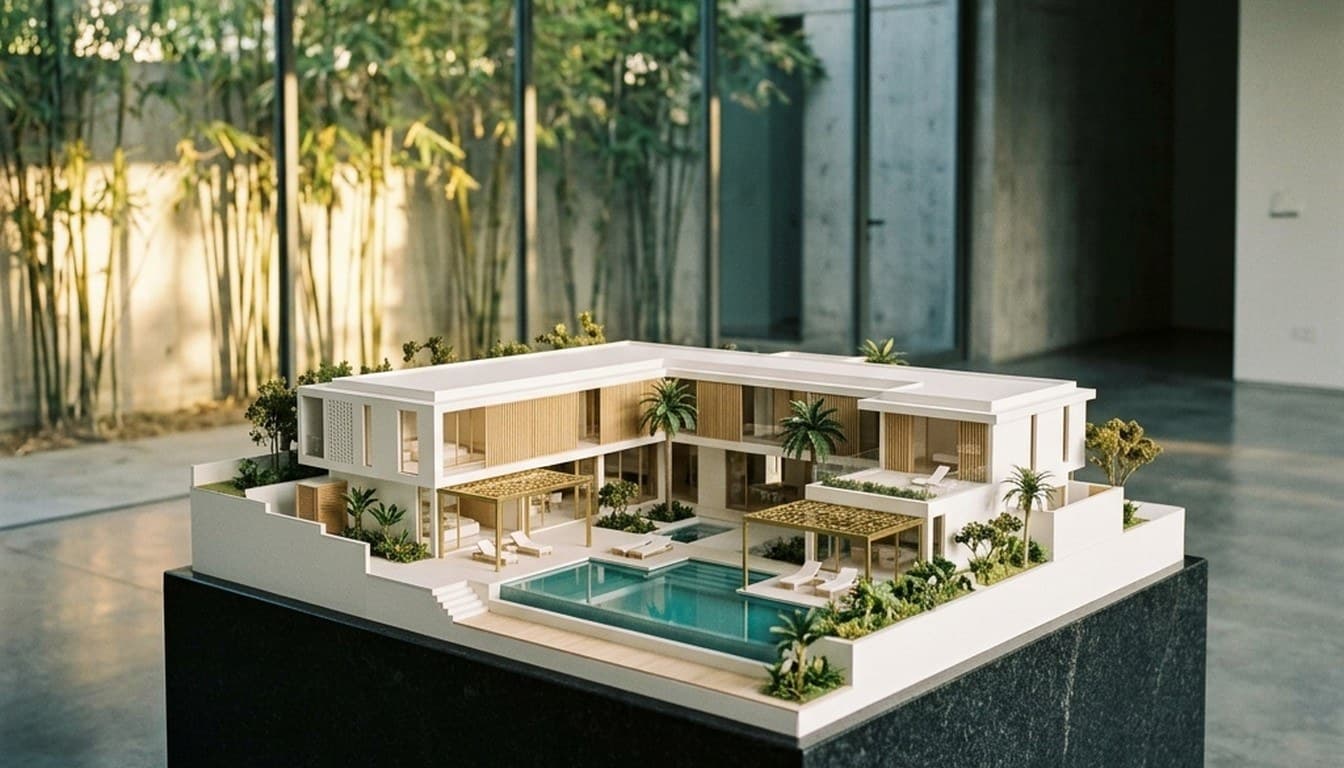
The Big Picture: Real Estate Went From 5 Codes to 14
Under KBLI 2025 — mandated by BPS Regulation No. 7 of 2025 — Indonesia's real estate classification expanded from just 5 codes to 14 codes, a 180% increase. Every single one of those 14 codes allows 100% foreign ownership through a PT PMA structure. For property investors, developers, and operators targeting Indonesia (and Bali in particular), this is the most significant regulatory shift in a decade.
The old KBLI 2020 framework grouped most real estate activity under broad, ambiguous codes. A villa management company, a MICE venue operator, and a tourism estate developer all fell under essentially the same umbrella. That ambiguity created compliance risk: businesses were shoehorned into codes that did not reflect their actual operations, leading to tax benchmark mismatches and licensing confusion.
KBLI 2025 eliminates that problem. The granular expansion means your registered code can now precisely match what your business actually does — and that precision matters for tax benchmarks under Coretax, for risk classification on your NIB, and for demonstrating compliant foreign ownership.
The June 2026 transition window has closed. After that date, old KBLI 2020 codes can create friction for new permits, investment activity reports (LKPM), and import approvals. If you operate in real estate, remediate any mismatch before the next filing, license amendment, or LKPM submission.
Core Real Estate Codes (68xxx): What You Need to Know
The primary real estate codes under KBLI 2025 fall under Division 68. Here are the key codes relevant to foreign investors and property operators:
68111 — Real Estat Yang Dimiliki Sendiri Atau Disewa
This is the foundational real estate code. It covers businesses that own or lease real estate for income — rental properties, property portfolios, land banks, and asset management. If you own villas, apartments, or commercial space and generate revenue from leasing them, this is your primary code.
- Risk Level: Rendah (Low)
- PMA Status: 100% foreign ownership allowed
- Use Cases: Villa rental portfolios, apartment leasing, commercial property management, land holding companies
The low risk classification means streamlined licensing through OSS — no additional sector-specific permits beyond the standard NIB.
68112 — Penyewaan Venue MICE dan Event Khusus
This is a brand-new code under KBLI 2025, carved out specifically for the meetings, incentives, conferences, and exhibitions (MICE) industry. Previously, MICE venue operators had to register under generic real estate or hospitality codes, creating classification confusion.
- Risk Level: Sedang (Medium)
- PMA Status: 100% foreign ownership allowed
- Use Cases: Conference centers, exhibition halls, wedding venues, corporate retreat facilities, co-working event spaces
Medium risk means additional licensing requirements beyond the basic NIB — typically sector-specific permits related to safety, capacity, and event management. For Bali, where the MICE industry is growing rapidly alongside tourism, this code gives venue operators a clean, purpose-built classification.
68120 — Kawasan Pariwisata
Another significant addition under KBLI 2025. This code covers tourism zone development and management — the planning, construction, and operation of integrated tourism areas. Think large-scale resort complexes, eco-tourism estates, and mixed-use tourism developments.
- Risk Level: Sedang (Medium)
- PMA Status: 100% foreign ownership allowed
- Use Cases: Integrated resort developments, eco-tourism estates, mixed-use tourism zones, coastal development projects
This code is particularly relevant for Bali, where tourism zone development intersects with strict spatial planning regulations and Green Zone restrictions (more on that below).
68200 — Real Estate Atas Dasar Balas Jasa (Fee) atau Kontrak
This code covers fee-based real estate services — property management on behalf of third parties, real estate brokerage, property valuation, and consultancy. If you manage other people's properties for a fee (rather than owning the properties yourself), this is the correct classification.
- Risk Level: Varies by specific sub-activity
- PMA Status: 100% foreign ownership allowed
- Use Cases: Property management agencies, real estate brokerages, villa management companies operating third-party properties, property consultancies
Old vs. New: The KBLI Code Comparison
Understanding what changed requires looking at the before and after. The following table summarizes the shift from KBLI 2020 to KBLI 2025 for the core real estate codes:
| Activity | KBLI 2020 | KBLI 2025 | Risk Level | PMA |
|---|---|---|---|---|
| Own/leased property rental | 68110 (broad) | 68111 (specific) | Rendah | 100% |
| MICE venue rental | 68110 (lumped in) | 68112 (new, dedicated) | Sedang | 100% |
| Tourism zone management | No specific code | 68120 (new) | Sedang | 100% |
| Fee-based property services | 68200 (broad) | 68200 (refined sub-codes) | Varies | 100% |
| Residential construction | 41011 | 41011 (unchanged) | Sedang | 100% |
| Accommodation construction | 41012 (broad) | 41017 (specific) | Sedang | 100% |
| Other building construction | 41019 | 41019 (unchanged) | Sedang | 100% |
The pattern is clear: KBLI 2025 breaks apart the old catch-all codes into precise sub-categories. Where 68110 once covered everything from villa rentals to conference venues, you now have 68111 for property ownership/leasing and 68112 specifically for MICE. Where tourism zone management had no dedicated code, 68120 now exists.
This granularity is not bureaucratic overhead — it is compliance protection. When Coretax compares your tax filings against industry benchmarks, a MICE venue operator benchmarked against general real estate will show anomalous margins. The correct code prevents that mismatch.
Construction Codes: The Other Half of Property Development
Real estate codes (68xxx) cover ownership, management, and services. But if you are building — constructing villas, hotels, apartments, or commercial buildings — you need construction codes from Division 41. These are separate from your real estate classification and must be registered alongside it.
41011 — Konstruksi Gedung Tempat Tinggal (Residential Construction)
Covers the construction of houses, apartments, and other residential buildings. If your PT PMA builds villas for sale or for your own rental portfolio, this code is required during the construction phase.
41017 — Konstruksi Gedung Penginapan (Accommodation Building Construction)
This is the construction code for hotels, resorts, guesthouses, and accommodation buildings. For villa developers targeting the hospitality market, 41017 is more appropriate than 41011 — it signals that the buildings are designed for short-term accommodation rather than residential living.
- PMA Status: 100% foreign ownership allowed
- Risk Level: Sedang (Medium)
41019 — Konstruksi Gedung Lainnya (Other Building Construction)
A catch-all for commercial buildings, offices, retail spaces, and mixed-use structures that do not fall neatly into residential or accommodation categories.
Important: A villa development company typically needs multiple KBLI codes registered on its NIB. For example:
- 41017 for the construction phase
- 68111 for ongoing property management and rental
- 55193 (Vila) if operating as a hospitality business with daily guest services
Getting this combination right is critical. Registering only 68111 when you are actively constructing buildings exposes you to licensing gaps. Registering only 41017 without 68111 means your post-construction rental operations are unclassified.
Property Ownership Structures for Foreign Investors
Understanding KBLI codes is only half the equation. The other half is understanding how foreigners can legally hold property in Indonesia.
Hak Guna Bangunan (HGB) — Through PT PMA
The primary vehicle for foreign property ownership in Indonesia is the PT PMA (foreign-owned limited liability company). A PT PMA can hold Hak Guna Bangunan (Right to Build) title on land, which grants the right to construct and own buildings on that land.
- Initial Term: 30 years
- First Extension: 20 years
- Second Extension: 30 years
- Total Maximum: 80 years
HGB through PT PMA is the standard structure for villa developments, hotel projects, and commercial property. The PT PMA itself is 100% foreign-owned (under KBLI 2025 real estate codes), and the HGB title is held in the company's name.
Investment Requirements (Permen BKPM 5/2025):
- Minimum paid-up capital: IDR 2.5 billion per PT PMA (Pasal 26(10), locked in for 12 months)
- Minimum total investment: more than IDR 10 billion per 5-digit KBLI per project location, excluding land and buildings (Pasal 26(2)) — a separate figure from paid-up capital
Hak Pakai — Direct Foreign Ownership
Individual foreigners (not through a company) can hold Hak Pakai (Right to Use) directly in their own name. This is suitable for personal residences but not for commercial development.
- Term: Up to 30 years, extendable
- Limitation: Personal use only — you cannot develop or commercially rent property held under Hak Pakai
- Requirement: Must hold a valid visa (KITAS or KITAP)
Leasehold Agreements
Many foreign investors in Bali use long-term leasehold agreements (sewa) with Indonesian landowners. This is a contractual arrangement, not a land title. Leasehold terms typically range from 25 to 30 years with options to extend.
Leasehold is common for villas and restaurants where the foreign investor does not want the overhead of a full PT PMA structure. However, leasehold offers less legal protection than HGB — it is a contract between parties, subject to Indonesian contract law, and does not appear on the land certificate.
For serious property development or investment, HGB through PT PMA remains the recommended structure. For more details on the PT PMA registration process, see our PT PMA Registration Guide.
Green Zone Restrictions in Bali
Bali operates under strict spatial planning regulations (Rencana Tata Ruang Wilayah — RTRW) that divide the island into zones with different permitted uses. The most critical distinction for property developers is between Green Zones and development-permitted zones.
Green Zones are designated protected areas where construction is heavily restricted or prohibited. These include:
- Sacred temple buffer zones (typically 2 km radius from major temples)
- Rice terrace protection areas (particularly in Tabanan and Gianyar)
- Coastal setback zones
- Water catchment areas
- Forest conservation zones
What this means for KBLI 68120 (Kawasan Pariwisata): Tourism zone development under this code must comply with Bali's spatial planning. You cannot register 68120 and develop a tourism estate in a Green Zone — the zoning restrictions override the KBLI classification. Before acquiring land for any development project, verify the zoning status through the local Badan Pertanahan Nasional (BPN) office and the relevant Kabupaten spatial planning authority.
Practical impact: Some of Bali's most desirable areas — Ubud's rice terraces, parts of Canggu's coastal strip, the temple surrounds of Besakih — fall within Green Zone restrictions. Development projects in these areas face permit denials regardless of how correctly your KBLI codes are registered.
For a broader look at how KBLI 2025 affects Bali-based businesses across all sectors, read our KBLI 2025 and Bali's Business Transformation guide.
MICE and Event Venues: A New Classification Category
The creation of KBLI 68112 (Penyewaan Venue MICE dan Event Khusus) deserves special attention. This code did not exist under KBLI 2020. Its introduction reflects Indonesia's strategic push to grow the MICE industry — a sector worth an estimated USD 5 billion annually in Southeast Asia.
Before KBLI 2025, a conference center in Bali would register under generic real estate (68110) or possibly hospitality codes. This created two problems:
-
Tax benchmarks were wrong. MICE venues have fundamentally different cost structures and margins than general real estate. A conference center benchmarked against apartment rentals shows anomalous financials.
-
Licensing was unclear. Without a dedicated code, MICE operators navigated an ambiguous permit landscape — sometimes classified as events, sometimes as property, sometimes as tourism.
KBLI 68112 solves both problems. It gives MICE operators a clean classification with appropriate benchmarks and a clear licensing pathway. The medium risk level means you will need sector-specific permits (safety, capacity, fire compliance), but foreign ownership is unrestricted.
Who should use 68112:
- Convention and exhibition centers
- Dedicated wedding and event venues
- Corporate retreat and conference facilities
- Co-working spaces that rent event rooms as a primary revenue stream
- Beach clubs and similar venues where event hosting is the core business (as opposed to F&B)
If event hosting is secondary to your main activity (for example, a hotel that occasionally hosts conferences), you likely do not need 68112 — your hospitality codes cover incidental events. But if MICE revenue represents a significant portion of your business, registering 68112 ensures correct classification.
The Compliance Timeline: What to Do After the June 2026 Window
Step 1: Audit Your Current KBLI Codes
Pull your NIB from OSS and list every KBLI code currently registered. For each code, check whether it still exists under KBLI 2025 or has been split into new sub-codes. Real estate businesses registered under the old 68110 will almost certainly need to migrate to either 68111, 68112, or both.
Step 2: Match Codes to Actual Operations
For each revenue-generating activity in your business, identify the correct KBLI 2025 code. A villa development and management company might need:
- 41017 — Construction of accommodation buildings
- 68111 — Ongoing property management and rental income
- 55193 — Villa hospitality operations (if providing daily guest services)
Do not register codes you do not need. Each code carries its own risk level, licensing requirements, and tax benchmarks. Over-registering creates unnecessary compliance obligations.
Step 3: Prepare Documentation
Have your notarial deeds and articles of association updated to reflect the new KBLI codes. This preparation can happen now, even before the OSS system fully integrates KBLI 2025. When the system update goes live, you can execute the change immediately.
Step 4: Monitor OSS Integration
Verify the live OSS workflow before filing KBLI 2025 changes. Do not force unsupported updates; keep mapping and deed evidence ready so you can act quickly through the official path.
Step 5: Review Investment Thresholds
If you are adding new KBLI codes to an existing PT PMA, confirm that your paid-up capital meets the IDR 10 billion minimum required under BKPM Regulation 5/2025. Adding codes that trigger a higher investment classification could require a capital increase.
Frequently Asked Questions
Can foreigners develop property in Indonesia through PT PMA?
Yes. Under KBLI 2025, all real estate codes (68xxx) allow 100% foreign ownership through PT PMA. The company holds Hak Guna Bangunan (HGB) title, valid up to 80 years. Minimum investment is IDR 10 billion per BKPM Regulation 5/2025.
What KBLI code do I need for a villa development project?
Villa development requires KBLI 41017 (Konstruksi Gedung Penginapan) for the construction phase and 55193 (Vila) for hospitality operations. For ongoing property management and rental income, add 68111 (Real Estat Yang Dimiliki Sendiri Atau Disewa).
What changed in real estate under KBLI 2025?
KBLI 2025 expanded real estate from 5 codes to 14 codes (+180%), providing much more granular classification. All codes allow 100% PMA. New categories include MICE venue rental (68112) and tourism zone management (68120). The old catch-all codes have been split into precise sub-categories.
Do I need separate codes for construction and property management?
Yes. Construction (41xxx) and real estate management (68xxx) are separate KBLI divisions. If your business both builds and manages properties, you need codes from both divisions on your NIB.
What happens if I don't update my KBLI codes after the June 2026 transition window?
After June 2026, old KBLI 2020 codes become unrecognized for new permit applications, import approvals, and LKPM investment activity reports. Your NIB remains valid, but you cannot obtain new licenses or report investment activities until the codes are updated.
Next Steps: Get Your PT PMA Set Up Correctly
If you are planning a property investment, villa development, or MICE venue in Bali, the foundation is a correctly structured PT PMA with the right KBLI 2025 codes from day one. Retrofitting codes after incorporation is possible but creates unnecessary delay and compliance risk.
Bali Zero handles the complete PT PMA setup — from company incorporation with the correct KBLI codes, through NIB registration on OSS, to domicile establishment. PT PMA formation starts at IDR 20,000,000, with virtual office services available at IDR 5,000,000 for companies that do not need a physical office presence.
For details on the full process, see our PT PMA Registration Guide. For a broader understanding of property ownership structures and due diligence, read Buying Property as a Foreigner in Bali.
The June 2026 transition window has closed. The codes are clear. The opportunity — 14 real estate classifications, all open to 100% foreign ownership — has never been this well-defined. The question is whether your records are verified and remediated before the next filing surfaces the gap.
Topics

Zantara AI
AI Business Advisor
Questions about how this applies to your case?
Bali Zero handles visas, company setup, tax and property compliance in Indonesia. Ask us directly on WhatsApp.
Chat with Bali Zero on WhatsApp