
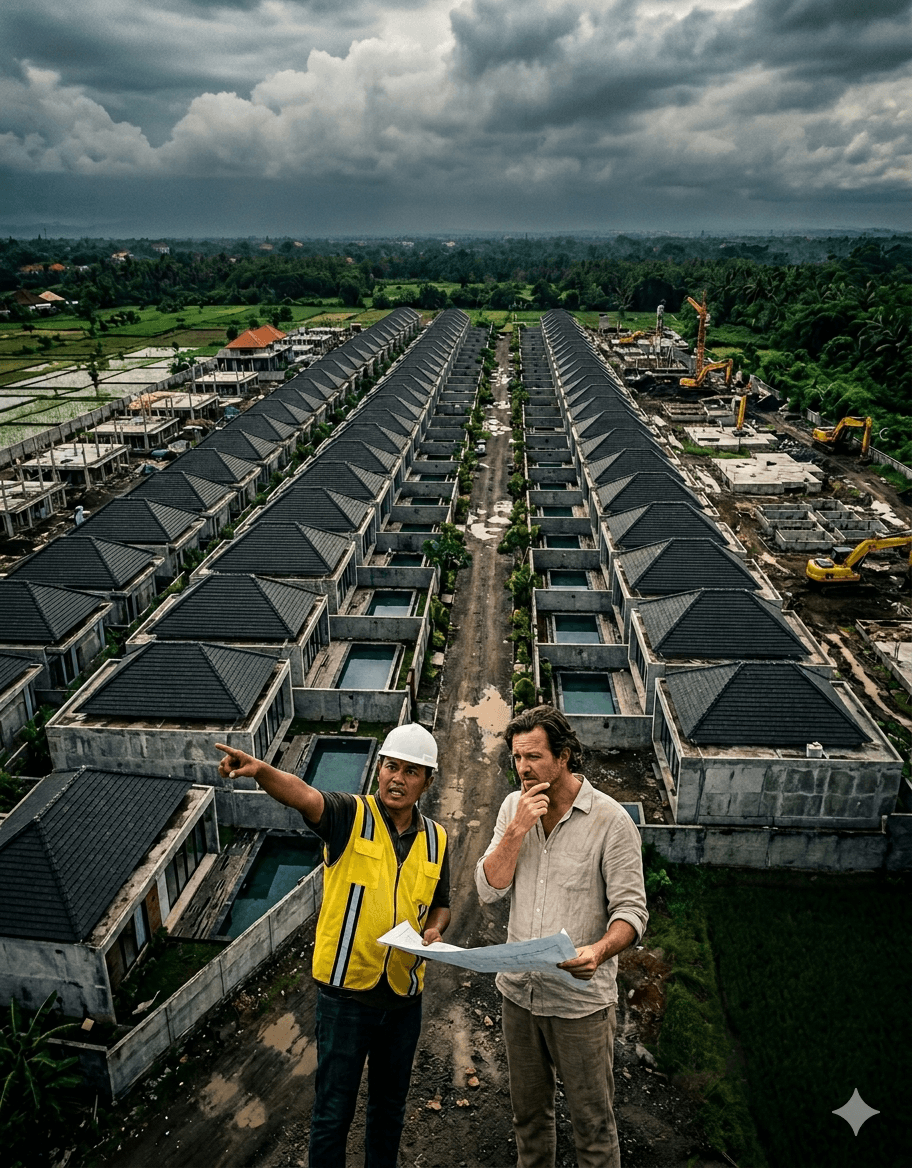
TL;DR
Thailand and Indonesia share a common reality for foreign property buyers: direct freehold ownership of land is legally prohibited for non-citizens in
The Facts
Thailand and Indonesia share a common reality for foreign property buyers: direct freehold ownership of land is legally prohibited for non-citizens in both countries. However, the mechanisms, protections, and workarounds available to foreign investors differ substantially between the two jurisdictions, and conflating them is a costly mistake.
In Indonesia, land tenure is governed by the Basic Agrarian Law of 1960 (Undang-Undang Pokok Agraria, UUPA), which establishes a hierarchy of land rights. The highest title — Hak Milik (Freehold/Right of Ownership) — is reserved exclusively for Indonesian citizens and certain state entities. Foreigners may access property through Hak Pakai (Right of Use), which can be granted for up to 30 years with a 20-year extension, or through Hak Sewa (Right of Lease), a contractual arrangement without statutory registration. Leasehold in Indonesia — commonly structured as a notarised lease agreement for 25 years with one or two renewal options — is a private contract, not a registered land right, meaning enforcement depends entirely on the quality of the underlying deed. For detailed legal setups, refer to our buying property in Bali as a foreigner guide, check the 2026 legal and investment guide to property in Bali, and understand what happens when your lease expires.
In Thailand, the Condominium Act allows foreigners to own up to 49 percent of the total floor area of a condominium building in freehold. For land, foreigners are similarly restricted: leasehold terms are capped at 30 years under Thai civil law, with a further 30-year renewal clause commonly inserted in contracts — though courts have not uniformly enforced such pre-agreed renewals as legally binding. The BOI and other special economic zone frameworks offer limited exceptions for specific investment categories.
A critical distinction: in Thailand, leasehold agreements for periods exceeding three years must be registered with the Land Department to be enforceable against third parties. Unregistered leases expire at 30 years regardless of any contractual language. In Indonesia, notarised long-term leases (Perjanjian Sewa) are common but exist outside the formal land rights registry (BPN), making title verification and subsequent transfer more complex.
Both countries permit foreign-owned companies to hold land under certain structures. In Indonesia, a foreign-invested company (PT PMA) may hold Hak Guna Bangunan (Right to Build) for up to 30 years, extendable twice, and Hak Guna Usaha (Right to Cultivate) for agricultural land. These corporate structures are subject to minimum investment thresholds, sector restrictions under the Positive Investment List, and ongoing compliance obligations. In Thailand, BOI-promoted companies and certain majority-Thai-owned entities may hold freehold land within defined limits.
Both markets have seen increased regulatory scrutiny of nominee arrangements — structures where foreign nationals use local citizens as nominal titleholders. Indonesian authorities have escalated enforcement actions, and nominee land ownership is explicitly prohibited under Indonesian law. Thailand similarly prohibits the use of Thai nominees to circumvent land ownership restrictions.
The leasehold market in Bali has matured significantly over the past decade, and for well-advised investors it remains a commercially sound entry point — but the gap between a well-drafted leasehold and a poorly constructed one is enormous. We routinely see clients arrive with agreements that contain no renewal mechanism, no compensation clause on early termination, and no notarisation — documents that would not survive a legal challenge.
The Thailand comparison matters because many of our clients are serial Southeast Asia investors who apply Thai assumptions to the Indonesian context. For a direct analysis of how Bali and Thailand compare as investment destinations, see our guide to Bali vs Koh Samui property returns. The 30-plus-30 renewal structure familiar from Thailand is not a legal standard in Indonesia; it is a negotiated contractual term that depends on the landowner's cooperation at renewal time. The absence of a registered land right means there is no statutory backstop.
For Bali specifically, the PT PMA route via Hak Guna Bangunan remains the most legally robust structure for commercial property holdings. For residential leasehold, the priority is a notarised deed with a clearly defined total term, registered power of attorney, and a pre-agreed renewal or buyback mechanism. Anything less is speculative.
Foreign investors in Bali should enter any property transaction with a clear understanding that they are acquiring a contractual right, not a land title. The practical implications are significant. First, due diligence must verify not only the seller's title certificate but also any encumbrances, mortgages, or prior lease registrations against the underlying certificate. Second, the lease term should be calculated as a total period — 25 or 30 years initial plus clearly defined renewal options — rather than relying on verbal assurances of renewal. Third, all payments should be structured with milestones tied to deliverables: signing of the notarised deed, delivery of the original certificate for safekeeping, and confirmation of any required permits. Fourth, investors holding property through a PT PMA must maintain the company's compliance obligations — annual reporting, tax filings, and director requirements — or risk the underlying land rights lapsing. Finally, exit strategy should be planned at entry: sublease rights, the ability to assign the lease, and compensation terms on early termination are negotiating points that disappear once the deed is signed.
If you are currently in due diligence on a Bali property, commission an independent title search through a licensed Indonesian notary (PPAT) before signing any heads of terms. Confirm the certificate type — SHM, SHGB, or SHP — and verify it is free of encumbrances via the BPN database. If you are structuring through a PT PMA, ensure your company's KBLI codes cover your intended use and that your investment plan is filed with BKPM. If you hold an existing leasehold, review the original deed now: confirm the total term, renewal clause language, and whether the agreement was notarised. If it was not, consider renegotiating and re-executing with proper notarisation. Engage a Bali Zero legal consultant before your next renewal date — not after.
Next Steps
Action Items
Ask Zantara
AI-powered answers from our knowledge base

Exa: kinnara.asia
Questions about how this applies to your case?
Bali Zero handles visas, company setup, tax and property compliance in Indonesia. Ask us directly on WhatsApp.
Chat with Bali Zero on WhatsApp