
TL;DR
**Tempeh is one of Indonesia's most enduring culinary exports, yet its origins remain deeply rooted in Javanese tradition. The food is produced through **
The Facts
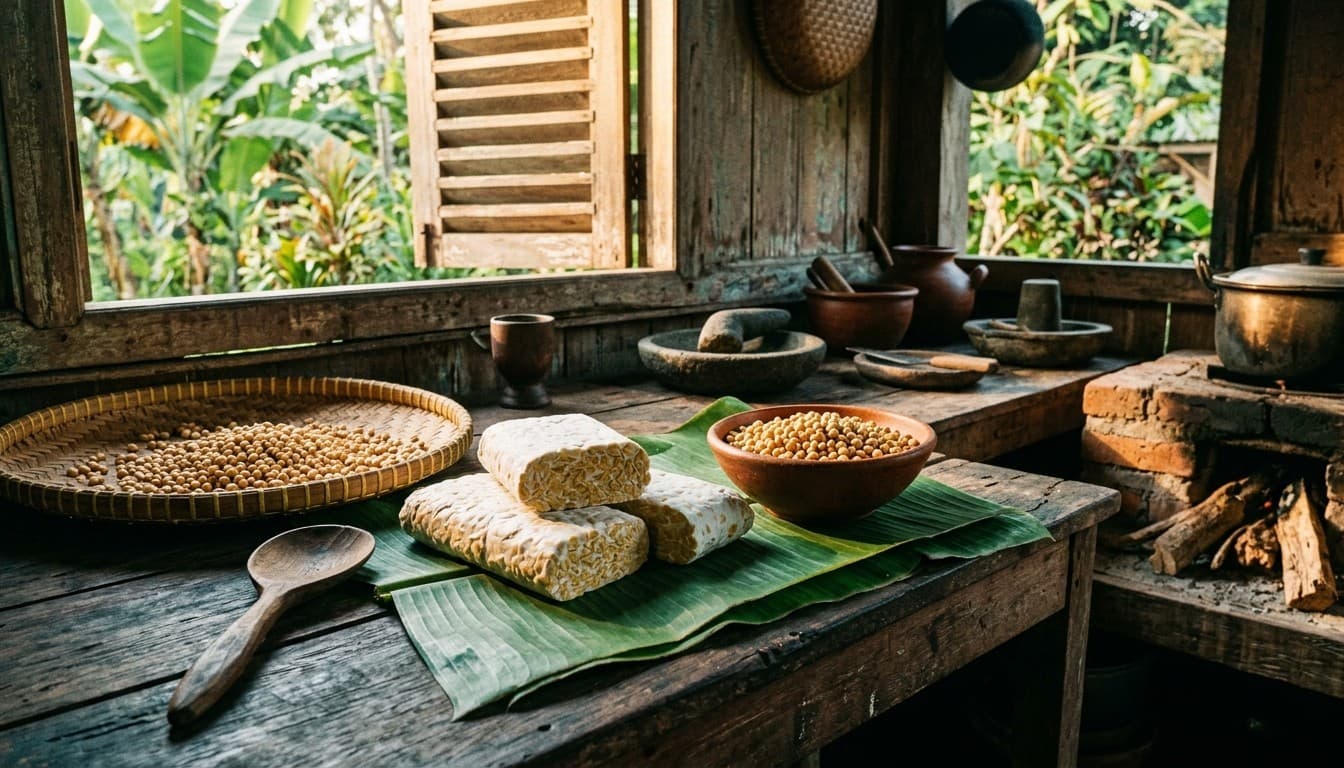
Tempeh is one of Indonesia's most enduring culinary exports, yet its origins remain deeply rooted in Javanese tradition. The food is produced through a controlled fermentation process in which cooked soybeans are inoculated with a mold culture — primarily Rhizopus oligosporus — and left to bind into a firm, protein-dense cake over roughly 24 to 48 hours. This process, developed centuries ago in Central Java, represents one of the earliest applications of applied microbiology in Southeast Asian food culture.
Unlike tofu, which originated in China and spread across Asia, tempeh is considered indigenous to Java. Historical records and anthropological research suggest it has been produced and consumed on the island for at least 400 years, with references appearing in Javanese manuscripts dating to the 19th century. The technique was refined and transmitted across generations of Javanese households and small-scale producers, embedding itself as both a dietary staple and a cultural artifact.
The nutritional profile of tempeh is notably robust. It is rich in complete protein — containing all essential amino acids — as well as dietary fiber, B vitamins, and minerals including manganese, phosphorus, and magnesium. The fermentation process also breaks down phytic acid, improving the bioavailability of nutrients compared to unfermented soy products. Some research has pointed to tempeh's probiotic properties, though the live cultures are largely neutralized during cooking.
Globally, tempeh has moved well beyond its Javanese origins. It is now a staple in Western plant-based diets and has found shelf space in supermarkets across Europe, the United States, and Australia. The global plant-based protein market — valued in the tens of billions of dollars — has accelerated demand for traditional fermented proteins like tempeh, which are seen as more whole-food and less processed than newer synthetic meat alternatives.
In Indonesia, tempeh production remains largely artisanal. Tens of thousands of small and medium-scale producers, often family-run operations, supply local markets and restaurants. However, the sector faces structural pressures: soybean prices are subject to global commodity swings, and Indonesia imports a significant share of its soybeans — primarily from the United States and Brazil — leaving domestic producers exposed to currency and supply chain volatility.
Bali Zero Take
The Hidden Insight
olatility.
In Practice
For expats living in Bali, tempeh is one of the most cost-effective and nutritionally complete proteins available locally, typically priced well below imported meat or dair
Our Analysis
y alternatives. It is widely available in traditional markets (pasar), supermarkets such as Pepito and Bintang, and increasingly in premium form at organic stores and health food boutiques in Seminyak
Our Advice
, Canggu, and Ubud. Restaurants and warungs serve it fried, grilled, or as a component of nasi campur and other traditional dishes. For those managing dietary restrictions — whether vegan, gluten-free
Next Steps
Action Items
Ask Zantara
AI-powered answers from our knowledge base

Indonesia Expat
Questions about how this applies to your case?
Bali Zero handles visas, company setup, tax and property compliance in Indonesia. Ask us directly on WhatsApp.
Chat with Bali Zero on WhatsApp