
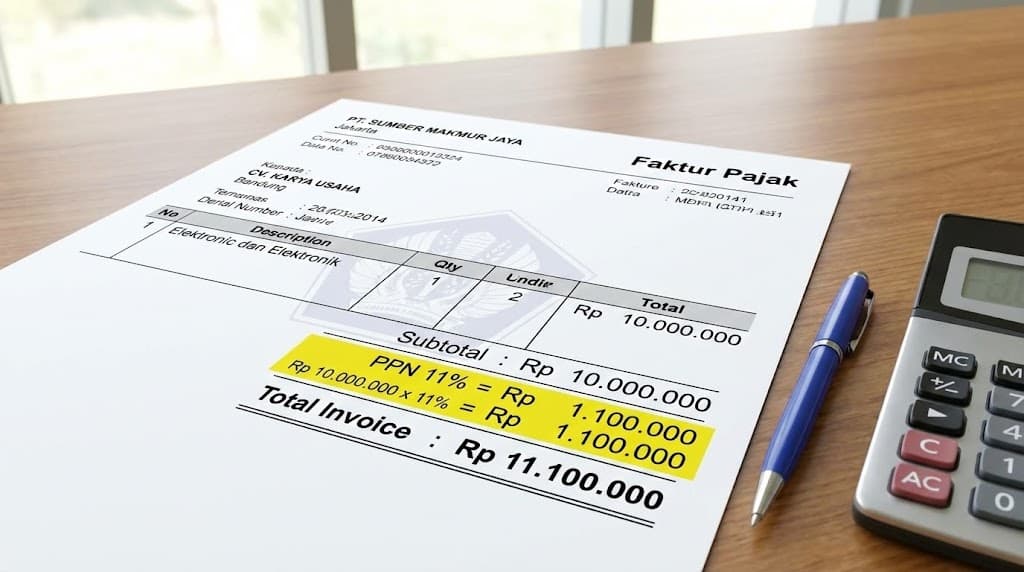
Understanding PPh 26: Withholding Tax on Foreign Payments
PPh 26 (Pajak Penghasilan Pasal 26) is Indonesia's withholding tax mechanism for income paid by Indonesian residents to non-resident foreign individuals and entities. This tax ensures that foreign parties receiving Indonesia-source income contribute tax at source, even without physical presence or permanent establishment in Indonesia.
For Indonesian companies, particularly PT PMA (foreign investment companies) with cross-border transactions, PPh 26 compliance is critical. The withholding obligation arises whenever your company makes payments to foreign parties for services, dividends, interest, royalties, or other specified income types. Failure to withhold and remit PPh 26 creates significant liability - the Indonesian payer becomes responsible for the tax, plus penalties and interest.
The standard PPh 26 rate is 20% of gross payment, but Indonesia's extensive network of tax treaties (Perjanjian Penghindaran Pajak Berganda, or P3B) often provides reduced rates when proper documentation is obtained. Understanding when PPh 26 applies, how to apply treaty benefits, and proper compliance procedures protects your company from unexpected tax assessments and optimizes cross-border payment costs.
When PPh 26 Applies: Cross-Border Payment Scenarios
PPh 26 withholding is required when Indonesian entities make payments to non-residents for Indonesia-source income. Understanding the triggering conditions is essential.
Who Must Withhold PPh 26
All Indonesian tax residents making payments to non-residents must withhold PPh 26:
Indonesian Entities:
- PT (both PMDN and PMA)
- CV and other business entities
- Foundations with business activities
- Government agencies
- Any Indonesian tax resident
Unlike PPh 23 (which requires designation as withholding agent), any Indonesian entity making foreign payments automatically has PPh 26 withholding obligations.
Who Receives PPh 26 Withholding
PPh 26 applies to payments to non-resident recipients:
Foreign Individuals:
- Foreign nationals without Indonesian tax residency
- Indonesian citizens residing abroad (non-resident status)
- Not present in Indonesia, or present less than 183 days in 12 months
Foreign Entities:
- Foreign companies without Indonesian presence
- Foreign companies with Indonesian presence but without Permanent Establishment (BUT/PE)
- Foreign branches or offices (depending on PE determination)
Key Determination: Residency Status
The critical question is always: Is the recipient an Indonesian tax resident?
Indonesian Tax Resident (PPh 23 applies):
- Indonesian individuals residing in Indonesia
- Indonesian entities established or domiciled in Indonesia
- Entities with permanent establishment in Indonesia
- Foreign individuals present in Indonesia 183+ days in 12 months
Non-Resident (PPh 26 applies):
- Foreign individuals without Indonesian residence
- Foreign entities without Indonesian PE
- Income earned but recipient is abroad
Types of Income Subject to PPh 26
PPh 26 applies to most Indonesia-source income paid to non-residents:
1. Business Profits and Services
Professional Services:
- Consulting fees (management, technical, IT, legal, financial)
- Advisory services
- Professional fees
- Training and education services
Technical Services:
- Engineering and technical consulting
- Technology services
- Design and planning services
- Software development
Other Services:
- Marketing and advertising services
- Research and development services
- Testing and inspection services
- Any service performed for Indonesian payer
Important PE Consideration: If services are performed in Indonesia and create a permanent establishment (typically services exceeding certain duration thresholds per tax treaties), different rules apply. The service provider may need to register for Indonesian tax and file corporate returns rather than being subject to withholding.
2. Dividends
Dividends paid by Indonesian companies to foreign shareholders:
- Cash dividends
- Stock dividends with cash option
- Disguised dividend distributions
- Branch profit remittances (treated as deemed dividends)
3. Interest
Interest paid to non-resident lenders:
- Bank loan interest
- Bond interest
- Debt securities interest
- Interest on trade financing
- Any interest payment on Indonesia-source debt
4. Royalties
Payments for intellectual property usage:
- Patent, trademark, copyright usage
- Software licensing
- Technology transfer fees
- Franchise fees
- Natural resource exploitation rights
- Know-how and technical information
5. Rental Income
Rental of property or equipment by non-residents:
- Equipment rental
- Machinery leasing
- Vehicle rental
- Any tangible property rental
6. Other Income
- Prizes and awards to non-residents
- Pension and annuity payments
- Income from sale of Indonesian real estate
- Capital gains from selling Indonesian assets (certain types)
Exemptions and Special Cases
Income Not Subject to PPh 26:
Branch Profits Tax: Foreign company permanent establishments operating in Indonesia are subject to regular corporate tax (PPh Badan) on business profits, plus potential Branch Profit Tax when remitting profits abroad (20% or treaty rate on after-tax profits).
Final Tax Income: Some income already subject to final withholding tax (PPh Final) is not additionally subject to PPh 26. Examples include construction services (subject to PPh 4(2) even for foreign contractors in certain circumstances).
Treaty-Exempt Income: Tax treaties may completely exempt certain income types. For example, some treaties exempt business profits unless attributable to a PE, or exempt shipping/aircraft income under reciprocal exemptions.
PPh 26 Standard Rate: 20% Withholding
Indonesia's domestic law imposes a standard 20% withholding rate on all PPh 26 income types:
Calculation Methodology
Formula:
PPh 26 Withheld = Gross Payment Amount × 20%
Net Payment to Foreign Party = Gross Payment - PPh 26 Withheld
The withholding is based on gross payment, not net income. No deductions for expenses are allowed - 20% applies to the full payment amount.
Example 1: Foreign Consultant Services
Your PT company engages a Singapore-based management consultant to develop business strategy.
Contract details:
- Service fee: USD 50,000
- Exchange rate: IDR 15,700/USD
- Gross fee in IDR: IDR 785,000,000
Withholding calculation:
- PPh 26 (20%): IDR 157,000,000
- Net payment: IDR 628,000,000 (USD 40,000 equivalent)
You transfer USD 40,000 to the consultant and remit IDR 157,000,000 to Indonesian DJP.
Example 2: Dividend to Foreign Shareholder
Your PT PMA declares annual dividends. A foreign parent company owns 80% of shares.
Dividend details:
- Total dividend: IDR 2,000,000,000
- Foreign shareholder portion (80%): IDR 1,600,000,000
Withholding calculation:
- PPh 26 (20%): IDR 320,000,000
- Net dividend remitted: IDR 1,280,000,000
The company remits IDR 1,280,000,000 to the foreign parent and pays IDR 320,000,000 to DJP.
Example 3: Software License Fee
Your company licenses project management software from a US-based provider.
License details:
- Annual license fee: USD 10,000
- Exchange rate: IDR 15,700/USD
- Fee in IDR: IDR 157,000,000
Withholding calculation:
- PPh 26 (20%): IDR 31,400,000
- Net payment: IDR 125,600,000 (USD 8,000 equivalent)
Example 4: Interest on Foreign Loan
Your PT PMA borrows from a foreign bank. Quarterly interest payment is due.
Interest details:
- Quarterly interest: USD 25,000
- Exchange rate: IDR 15,700/USD
- Interest in IDR: IDR 392,500,000
Withholding calculation:
- PPh 26 (20%): IDR 78,500,000
- Net payment: IDR 314,000,000 (USD 20,000 equivalent)
Currency Considerations
PPh 26 must be remitted to DJP in Indonesian Rupiah. When contracts are in foreign currency:
Exchange Rate Rules:
- Use Bank Indonesia middle rate (kurs tengah BI) on transaction date
- Transaction date = payment date or invoice booking date (per accounting policy)
- Rate published daily at www.bi.go.id
- Document the rate used and source
Proper documentation of exchange rates is essential for audit defense, especially when rates fluctuate significantly between contract signing and payment.
Tax Treaty Benefits: Reducing PPh 26 Rates
Indonesia has concluded tax treaties (P3B - Perjanjian Penghindaran Pajak Berganda) with over 70 countries. These treaties often provide reduced withholding rates on dividends, interest, royalties, and services.
Indonesia's Tax Treaty Network
As of 2026, Indonesia has tax treaties with major trading partners including:
Asia-Pacific: Singapore, Hong Kong, Japan, South Korea, China, Australia, New Zealand, India, Thailand, Malaysia, Philippines, Vietnam, Taiwan, Pakistan, Bangladesh
Europe: Netherlands, United Kingdom, Germany, France, Switzerland, Belgium, Luxembourg, Ireland, Spain, Italy, Austria, Sweden, Denmark, Norway, Finland
Americas: United States, Canada, Mexico, Brazil, Argentina, Chile, Venezuela
Middle East: UAE, Saudi Arabia, Qatar, Kuwait, Turkey, Iran, Egypt
Africa: South Africa, Algeria, Tunisia, Morocco
For complete current list, consult DJP website: https://pajak.go.id/id/internasional/perjanjian-penghindaran-pajak-berganda
Common Treaty Rates by Income Type
While each treaty varies, typical reduced rates include:
| Income Type | Domestic Rate | Common Treaty Range | Example (Singapore Treaty) |
|---|---|---|---|
| Dividends | 20% | 5-15% | 10% (15% if <25% ownership) |
| Interest | 20% | 10-15% | 10% |
| Royalties | 20% | 10-15% | 15% (10% for equipment) |
| Professional Services | 20% | 5-10% or exempt | 5% (if no PE created) |
| Technical Services | 20% | 5-10% or exempt | 5% (if no PE created) |
Example: Singapore Treaty Application
Your PT company pays dividends to Singapore parent company:
Without treaty (domestic rate):
- Dividend: IDR 1,000,000,000
- PPh 26 (20%): IDR 200,000,000
- Net dividend: IDR 800,000,000
With Singapore treaty (parent owns 80%):
- Dividend: IDR 1,000,000,000
- PPh 26 (10%): IDR 100,000,000
- Net dividend: IDR 900,000,000
Savings: IDR 100,000,000 (50% reduction in withholding tax)
Requirements for Applying Treaty Benefits
To apply reduced treaty rates, strict documentation requirements must be met:
1. Certificate of Residence (COR) / DGT Form
The most critical document is proof of the recipient's tax residency in the treaty country. Two formats are accepted:
DGT Form (Recommendation):
- Official OECD format
- Available on DJP website or OECD website
- Completed by recipient
- Certified by home country tax authority
- States recipient is resident of treaty country for tax purposes
- Specifies income types and recipient details
Certificate of Residence (Alternative):
- Official letter from home country tax authority
- Confirms recipient is tax resident
- May be less detailed than DGT form
- Must clearly identify recipient and residency year
Obtaining DGT Form:
- Recipient completes Part 1 (personal/company information, Indonesian payer details, income type)
- Recipient submits to home country tax authority
- Tax authority verifies residency and stamps/signs Part 2
- Recipient provides certified form to Indonesian payer
Validity:
- DGT forms are typically valid for calendar year of issue
- For ongoing payments, new DGT form needed annually
- Some treaties accept multi-year validity if circumstances unchanged
2. Timing of Submission
Before or at payment:
- DGT form should be submitted to Indonesian payer before payment is made
- Payer applies reduced rate at time of withholding
- Form must be available for inclusion in SPT Masa
Retroactive Application: If payment was already made at standard 20% rate:
- Recipient can claim refund by filing Indonesian tax return (if required to file)
- Or recipient may apply to DJP for refund with supporting documentation
- Refund process can take 6-12+ months
- Advance planning is strongly recommended
3. Additional Documentation
Beyond DGT form, maintain:
- Copy of contract or agreement
- Invoice from foreign party
- Proof of payment
- Beneficial ownership declarations (if required)
- Ultimate beneficial owner information
- Transfer pricing documentation (if related party)
Beneficial Ownership Requirements
Recent focus on preventing treaty abuse requires demonstrating beneficial ownership:
Beneficial Owner Test: The recipient must be the beneficial owner of the income, not merely a conduit or agent. Indicators of beneficial ownership include:
- Full control over income and use
- Bearing full risk of ownership
- No obligation to pass income to another party
- Economic substance in treaty country
Red Flags for Treaty Shopping:
- Conduit companies created solely for treaty access
- No business substance in treaty country
- No employees, office, or operations
- Immediate pass-through of income to third country
- Circular ownership structures
DJP may deny treaty benefits if beneficial ownership cannot be demonstrated, even with valid DGT form.
Transfer Pricing Interaction
For related party payments (common for PT PMA paying foreign parent or affiliates), treaty benefits and transfer pricing rules intersect:
Arm's Length Principle:
- Payment amount must be at arm's length (market rate)
- Excessive interest, royalties, or service fees may be challenged
- Adjustment to market rate may be required
- Only arm's length amount qualifies for treaty rate
Transfer Pricing Documentation:
- Prepare contemporaneous documentation
- Benchmarking studies supporting pricing
- Intercompany agreement terms
- Comparability analysis
Failure to comply with transfer pricing rules can result in rate adjustments and denial of treaty benefits on the excess amount.
Step-by-Step PPh 26 Compliance Process
Phase 1: Before Payment (Planning)
Step 1: Identify Payment Character
- What type of income is being paid? (services, dividends, interest, royalty)
- Is recipient a non-resident?
- Is there a PE that changes the analysis?
Step 2: Determine Applicable Rate
- Check if Indonesia has treaty with recipient's country
- Review treaty provisions for this income type
- Identify required documentation
Step 3: Request DGT Form If treaty applies:
- Notify foreign recipient of documentation requirement
- Provide blank DGT form template
- Specify information needed
- Set deadline well before payment date (allow 4-6 weeks)
Step 4: Review Contract Terms
- Is contract amount stated as gross or net?
- Who bears withholding tax? (usually recipient, but negotiable)
- Are amounts at arm's length for related parties?
- Payment terms and schedule
Example Contract Clauses:
Gross Amount (Recipient Bears Tax): "Service fee of USD 100,000, subject to Indonesian withholding tax as per applicable law. Consultant shall receive net amount after withholding."
Net Amount (Company Bears Tax): "Consultant shall receive net amount of USD 100,000 after all taxes. Company shall bear and gross-up any withholding tax obligations."
Gross-up calculations increase complexity and costs - typically avoided unless necessary for commercial reasons.
Phase 2: At Payment (Withholding)
Step 5: Calculate Withholding
- Determine gross amount in IDR (apply exchange rate if needed)
- Apply 20% or treaty rate (if DGT form received)
- Calculate net payment
Step 6: Execute Payment
- Transfer net amount to foreign party
- Clearly reference contract, invoice, withholding
- Maintain payment proof (wire transfer confirmation)
Step 7: Generate e-Bupot Certificate
- Login to DJP Online e-Bupot system
- Create PPh 26 withholding certificate
- Enter recipient details, payment amount, withholding
- Post and download bukti potong
- Provide copy to foreign recipient
Phase 3: Monthly Reporting (Remittance and Filing)
Step 8: Remit Withholding to DJP
Deadline: 10th of following month
Process:
- Login to DJP Online
- Generate e-Billing code for PPh 26 payment
- Specify payment amount (total withholdings for the month)
- Pay via internet banking using billing code
- Save NTPN (payment confirmation number)
Step 9: File SPT Masa PPh 26
Deadline: 20th of following month
Process:
- Login to DJP Online e-Bupot system
- Navigate to SPT Masa PPh 26 reporting
- Verify all posted bukti potong for the month
- Complete SPT Masa form
- Attach NTPN payment proof
- Attach DGT forms for any treaty rate applications
- Sign electronically
- Submit and download confirmation
Required SPT Masa Attachments:
- List of all withholding certificates (automated from e-Bupot)
- Payment proof (NTPN)
- Copy of DGT forms for treaty rate cases
- Supporting documents for unusual transactions
Phase 4: Record Keeping
Step 10: Maintain Comprehensive Documentation
For each transaction, file:
- Contract or agreement
- Invoices
- Payment proof
- DGT form (if applicable)
- e-Bupot certificate
- NTPN payment receipt
- SPT Masa submission confirmation
- Email correspondence
- Transfer pricing documentation (if related party)
Retention period: 10 years from transaction date
Common PPh 26 Scenarios for PT PMA
Scenario 1: Management Fees to Foreign Parent
Situation: Your PT PMA pays quarterly management fees to foreign parent company for group services (finance, HR, IT support, legal).
Fee structure:
- Quarterly fee: USD 40,000
- Annual total: USD 160,000
- Parent location: Netherlands
Without Treaty:
- Gross fee: USD 40,000 (IDR 628,000,000 at 15,700 rate)
- PPh 26 (20%): IDR 125,600,000
- Net payment: IDR 502,400,000 (USD 32,000)
With Netherlands Treaty (assuming 5% rate for services):
- Gross fee: IDR 628,000,000
- PPh 26 (5%): IDR 31,400,000
- Net payment: IDR 596,600,000 (USD 38,000)
Annual savings: USD 8,000 × 4 = USD 32,000
Required Documentation:
- DGT form from Netherlands tax authority
- Intercompany service agreement
- Service cost allocation methodology
- Transfer pricing documentation demonstrating arm's length pricing
- Invoice detailing services provided
Transfer Pricing Consideration: Management fees must be justified as providing actual value to Indonesian subsidiary at arm's length rates. Commonly challenged by DJP - ensure thorough documentation.
Scenario 2: Dividend Repatriation
Situation: Your PT PMA has successful year and declares dividends. Foreign parent owns 75%.
Dividend details:
- Total distributable profit: IDR 5,000,000,000
- Parent portion (75%): IDR 3,750,000,000
- Parent location: Singapore
Domestic Rate (20%):
- PPh 26: IDR 750,000,000
- Net dividend: IDR 3,000,000,000
Singapore Treaty Rate (10% for substantial ownership):
- PPh 26: IDR 375,000,000
- Net dividend: IDR 3,375,000,000
Savings: IDR 375,000,000
Required Documentation:
- DGT form from Singapore tax authority
- Shareholder register proving ownership percentage
- Board resolution approving dividend distribution
- Audited financial statements (if required)
- Proof of payment
Timing Consideration: Obtain DGT form before dividend distribution. Retroactive refunds are possible but slow and administratively burdensome.
Scenario 3: Software License and Cloud Services
Situation: Your company subscribes to various foreign software and cloud services.
Monthly costs:
- US-based project management tool: USD 500/month
- EU-based CRM system: EUR 800/month
- Cloud infrastructure (AWS Asia region): USD 2,000/month
Tax Treatment:
Software as a Service (SaaS) - Debatable: DJP position on cloud services taxation is evolving. Some arguments:
- Pure cloud access = service subject to PPh 26
- Software licensing = royalty subject to PPh 26
- Infrastructure services = service subject to PPh 26
Current Practice: Many SaaS payments are treated as services subject to 20% PPh 26 unless treaty applies. However, enforcement is inconsistent, especially for credit card payments to global platforms.
Recommended Approach:
- For material amounts (>USD 10,000 annually), treat as subject to PPh 26
- For subscriptions paid via credit card to automated systems, practical challenges exist in withholding
- Consult tax advisor on specific situations
- DJP guidance continues to evolve
Example Calculation (if withholding applied):
- Monthly SaaS: USD 3,300 (IDR 51,810,000)
- PPh 26 (20%): IDR 10,362,000
- Net service cost: IDR 41,448,000
Scenario 4: Foreign Consultant Project
Situation: Your PT hires foreign technical expert for 3-month project in Indonesia.
Engagement:
- Total fee: USD 75,000
- Duration: 3 months
- Work location: Indonesia
PPh 26 vs. PE Analysis:
Key Questions:
- Does presence in Indonesia create PE?
- Tax treaty PE threshold (often 120-183 days for service PE)
- Nature of services and supervision
If No PE (services <120 days per many treaties):
- Apply PPh 26 withholding at 20% or treaty rate
- Consultant receives net payment
- No Indonesian tax filing required for consultant
If PE Created (exceeds treaty threshold):
- Consultant may need to register for Indonesian tax
- File corporate/individual tax returns
- Pay Indonesian tax on profits (not gross withholding)
- More complex compliance
Safe Approach:
- Review treaty PE provisions before engagement
- Structure services to stay below PE threshold
- Apply PPh 26 withholding
- Obtain DGT form if treaty benefits desired
Scenario 5: Interest on Shareholder Loan
Situation: Your PT PMA borrowed from foreign parent company. Interest is payable semi-annually.
Loan terms:
- Principal: USD 2,000,000
- Interest rate: 6% per annum
- Semi-annual interest: USD 60,000
- Parent location: Japan
Domestic Rate Calculation:
- Interest payment: USD 60,000 (IDR 942,000,000)
- PPh 26 (20%): IDR 188,400,000
- Net interest: IDR 753,600,000
Japan Treaty Rate (typically 10% for interest):
- Interest payment: IDR 942,000,000
- PPh 26 (10%): IDR 94,200,000
- Net interest: IDR 847,800,000
Annual Savings: IDR 188,400,000
Critical Compliance Issues:
Arm's Length Interest Rate:
- 6% must be justified as market rate
- Transfer pricing documentation required
- Benchmarking against third-party loans
- DJP commonly challenges related party interest rates
Debt-to-Equity Ratio: Indonesian thin capitalization rules limit debt:
- Maximum debt-to-equity ratio 4:1 (for most industries)
- Excess debt = interest on excess is non-deductible
- Non-deductible interest still subject to PPh 26 withholding
Example: If your PT has equity IDR 2,000,000,000:
- Maximum deductible debt: IDR 8,000,000,000
- Your loan: USD 2,000,000 (IDR 31,400,000,000)
- Excess debt: IDR 23,400,000,000
- Portion of interest non-deductible
Even non-deductible interest requires PPh 26 withholding - the withholding obligation is independent of deductibility.
E-Bupot and Monthly SPT Masa PPh 26 Filing
Accessing E-Bupot System
Step 1: Login
- Navigate to https://djponline.pajak.go.id or CoreTax portal
- Login with company NPWP credentials
- Select e-Bupot 21/26 or e-Bupot 23/26 menu
Step 2: Navigate to PPh 26 Module
- Choose "Bukti Pemotongan PPh 26"
- System displays current month/year
Creating PPh 26 Withholding Certificate
Step 3: Enter Recipient Information
For Foreign Company:
- Name (as per passport/company registration)
- Country of residence
- Tax identification number (if any) from home country
- Address in home country
- Email for certificate delivery
For Foreign Individual:
- Full name (as per passport)
- Passport number
- Nationality
- Country of residence
- Address
Note: No NPWP exists for foreign recipients - enter foreign tax ID if available, or leave blank.
Step 4: Enter Transaction Details
Required fields:
- Transaction date (payment date)
- Income type code (from dropdown):
- Services
- Dividends
- Interest
- Royalties
- Other income
- Gross payment amount (IDR)
- Withholding rate (20% or treaty rate)
- Withheld amount (auto-calculated)
For Treaty Rate Applications:
- Select "Menggunakan Tarif P3B" (Using Treaty Rate)
- Select treaty country
- Enter treaty rate (e.g., 10%)
- System prompts for DGT form upload
Step 5: Upload Supporting Documents
For treaty cases:
- Upload scanned DGT form (PDF)
- Upload contract/agreement (if required)
- File size limits: typically 5MB per document
Step 6: Review and Post
- Verify all entered data carefully
- Click "Simpan" (Save)
- Review before posting
- Click "Posting" to finalize certificate
- Download bukti potong PDF
Posted certificates cannot be edited. Corrections require "Pembetulan" (correction certificate).
Monthly Payment and Reporting
Payment Deadline: 10th of following month Filing Deadline: 20th of following month
Payment Process:
- Generate e-Billing code
- Pay via internet banking
- Save NTPN receipt
SPT Masa Filing:
- Login to e-Bupot
- Select "Pelaporan SPT Masa PPh 26"
- Select reporting period
- System compiles all posted certificates
- Review summary:
- Number of withholding certificates
- Total gross payments
- Total PPh 26 withheld
- Number of treaty rate cases
- Attach NTPN payment proof
- Attach copies of DGT forms (for treaty cases)
- Sign electronically
- Submit
- Download confirmation (NTPS number)
Special Considerations for Treaty Cases
When filing SPT Masa with treaty rate applications:
Additional Reporting:
- List each treaty case separately
- Identify country and applicable treaty
- Attach DGT form for each recipient
- Explain rate applied and treaty article
DJP Review: DJP may review treaty applications:
- Request additional documentation
- Challenge beneficial ownership
- Verify arm's length pricing
- Assess substance of foreign recipient
Potential Outcomes:
- Acceptance: Treaty rate applied, no further action
- Additional questions: Respond with documentation
- Rejection: Assessed for additional 20% withholding plus interest and penalties
Prepare comprehensive documentation from the start to defend treaty applications.
Penalties for PPh 26 Non-Compliance
Administrative Penalties
Failure to Withhold: The Indonesian payer becomes liable for:
- 100% of tax not withheld
- Plus 48% annual interest (4% per month) from due date
- Penalty calculated: Tax × (1 + 0.04 × months late)
Example:
- Payment to foreign consultant: IDR 500,000,000
- PPh 26 should have been withheld (20%): IDR 100,000,000
- Discovered 12 months later
- Tax assessment: IDR 100,000,000
- Interest penalty: IDR 100,000,000 × 0.04 × 12 = IDR 48,000,000
- Total assessment: IDR 148,000,000
Late Payment (withholding done but not remitted):
- 2% monthly interest on withheld amount from due date
Late Filing SPT Masa:
- IDR 100,000 per SPT Masa filed late
Criminal Penalties
Willful failure to withhold can result in criminal prosecution:
- Imprisonment up to 6 years
- Fine up to 4 times tax not withheld
- Reserved for egregious cases of intentional non-compliance
Audit Risk Factors
Cross-border payments are high audit risk:
Red Flags:
- Foreign payments not reported in SPT Masa
- Treaty rate applications without proper documentation
- Related party payments above market rates
- Circular payment flows
- Payments to tax haven jurisdictions
- Inconsistent reporting (financial statements show payments not in SPT)
Foreign Recipient Impact
While primary obligation rests with Indonesian payer, foreign recipients are affected:
If PPh 26 Not Withheld:
- Foreign recipient may be assessed Indonesian tax
- Required to file Indonesian tax return
- Subject to penalties if not filed
- Difficulty enforcing assessment on foreign party leads to Indonesian payer liability
Foreign Tax Credit: Foreign recipients may claim credit for PPh 26 withheld:
- Provide bukti potong to home country tax authority
- Claim foreign tax credit on home country return
- Credit limited to foreign tax paid and home country tax on that income
Proper withholding and documentation benefits both payer and recipient.
Best Practices for PPh 26 Compliance
1. Implement Cross-Border Payment Approval Process
Payment Checklist:
- Is payee a non-resident foreign party?
- What type of income is this?
- Is PPh 26 withholding required?
- Is there an applicable tax treaty?
- Has DGT form been received?
- Has foreign party been informed of net payment?
- Is contract pricing at arm's length (if related party)?
- Has e-Bupot certificate been created?
2. Plan Treaty Applications in Advance
Timeline for DGT Form:
- Notify foreign party of requirement: at contract signing
- Allow 4-6 weeks for foreign tax authority certification
- Receive certified form: before payment date
- Submit to DJP: with or before payment
Tracking System:
- Maintain list of foreign payees
- Track treaty country for each
- Monitor DGT form validity periods
- Request renewal before expiration
3. Separate Tax Burden in Contracts
Clearly State:
- Is contract amount gross or net?
- Who bears withholding tax?
- Payment terms and currency
- Documentation requirements
Avoid ambiguity that leads to disputes or unexpected costs.
4. Transfer Pricing Documentation
For all related party payments:
- Prepare contemporaneous TP documentation
- Conduct benchmarking studies
- Document service benefits and value creation
- Maintain intercompany agreements
- Review annually for arm's length compliance
5. Monthly Closing Discipline
By 10th of Month:
- Compile all foreign payments from prior month
- Verify e-Bupot certificates created and posted
- Generate e-Billing and make payment
- Save NTPN receipt
By 20th of Month:
- File SPT Masa PPh 26
- Attach payment proof and DGT forms
- Download confirmation
- Update compliance tracker
6. Professional Tax Support
Given complexity of cross-border taxation, engage experts for:
- Treaty interpretation and application
- DGT form processes
- Transfer pricing documentation
- PE risk assessment
- Audit defense
Getting Professional PPh 26 Compliance Support
Managing PPh 26 obligations requires expertise in international tax law, treaty provisions, transfer pricing, and Indonesian compliance procedures. PT PMA companies with frequent cross-border payments benefit significantly from professional support.
Bali Zero provides comprehensive PPh 26 withholding and treaty application services:
Our PPh 26 Services:
- Cross-border payment review and withholding calculation
- Tax treaty analysis and rate determination
- DGT form procurement assistance
- e-Bupot certificate generation
- Monthly payment processing
- SPT Masa PPh 26 filing
- Transfer pricing documentation for related party payments
- PE risk assessment for foreign service providers
- Audit defense and DJP correspondence
Why Choose Bali Zero:
- Deep expertise in Indonesian international tax
- Experience with tax treaty applications
- Proven track record with DJP for treaty cases
- Bilingual service (English and Bahasa Indonesia)
- Technology-enabled efficient processes
- Fixed-fee pricing for predictable costs
- Responsive support for urgent cross-border transactions
Additional International Tax Services:
- Transfer pricing studies and documentation
- Tax treaty advisory
- PE and substance analysis
- Repatriation planning
- Foreign tax credit optimization
- Cross-border restructuring
Contact Bali Zero Today:
Email: hello@balizero.com WhatsApp: +62 821-3454-721 Office: Bali, Indonesia
Don't let PPh 26 compliance become a source of unexpected tax costs and penalties. Partner with Bali Zero for expert cross-border tax management, treaty optimization, and full compliance assurance. Our team ensures accurate withholding, proper treaty applications, and comprehensive documentation - protecting your company and minimizing tax costs on foreign payments.
Schedule a consultation today to review your cross-border payment structure and identify tax treaty savings opportunities. We'll help you navigate the complexities of PPh 26 while ensuring full compliance with Indonesian and international tax regulations.
Topics

Zantara AI
AI Tax Advisor
Questions about how this applies to your case?
Bali Zero handles visas, company setup, tax and property compliance in Indonesia. Ask us directly on WhatsApp.
Chat with Bali Zero on WhatsApp